Artificial intelligence is changing warehouse logistics, too. What matters, however, is not where AI would be technically possible, but which specific problem AI can solve better than the SAP standard.
This page puts the topic into context: from the reality check for operational use cases in SAP EWM and SAP MFS, through the role of Joule, skills and agents, to the question of who is accountable for autonomously acting agents. For a deeper dive, it points to our three Executive Whitepapers.

Not every recurring problem is automatically a sensible AI use case. Before pursuing a use case, it is worth looking at five questions:
Typical areas of potential in SAP EWM and SAP MFS processes are error detection and root cause analysis, prioritization and operational decision support, workforce and capacity planning, early detection of operational bottlenecks, and risk-based quality assurance.
Not every company has a need for action in all five areas. The reality check is therefore not meant to generate as many AI ideas as possible, but to identify the few topics where a closer look is genuinely worthwhile.
With Clean Core, the SAP standard is increasingly becoming the common foundation for all companies. Access to SAP Joule and other copilots will also be taken for granted within a few years.
Differentiation emerges above the standard: through your own skills, agents and custom extensions on SAP BTP that reflect your own process know-how.
That is why a fixed sequence pays off. First, check whether the SAP standard or an SAP-native agent already covers the need. Only if a relevant gap remains does the question arise whether it should be closed with Joule Studio or a custom extension. The closer a solution stays to the SAP standard, the lower the effort and risk usually are.
Three Executive Whitepapers for CIOs and logistics managers that build on one another: from the reality check through the role of Joule, skills and agents to the governance of autonomous agents.
Which AI use cases in SAP EWM and SAP MFS make economic sense over the next two to three years?
With a concrete reality-check scenario from a highly automated warehouse.
Why SAP Joule alone is not yet a competitive advantage.
Where differentiation emerges with your own skills and agents in the customized layer above the SAP standard.
Who may grant an AI agent autonomy in SAP?
Governance by decision class, the chain of accountability, and the EU AI Act as a framework.
The first whitepaper in the series asks which AI applications in SAP EWM and SAP MFS will actually create economic value over the next two to three years, and where companies should still wait. It is aimed at CIOs as well as IT and logistics managers and draws on experience from projects in highly automated warehouses.
Why SAP EWM already makes a lot of AI unnecessary: automation applies rules, AI evaluates relationships. The greatest value is therefore found where many influencing factors act at the same time, information is incomplete and decisions have different consequences, not where SAP EWM is already strong.
AI recognizes patterns in error messages, relates similar incidents to one another, and suggests likely causes and measures. The benefit lies less in automatic error correction than in shorter diagnosis times and in making the experience of individual experts available to everyone.
Rules set the guardrails, AI optimizes within them. It can simulate courses of action and assess the consequences for the remaining shift, subsequent shifts and open customer orders.
Both use cases develop step by step: observe, support, partially automate.
Initiatives succeed where process knowledge, architecture expertise on SAP BTP and AI know-how come together.
If you are in the middle of an SAP S/4HANA migration, it usually makes sense to start six to twelve months after go-live. Once operations are stable, error detection is often the best starting point.

The second whitepaper tests the thesis from Part 1 under new conditions: with the Autonomous Enterprise that SAP presented at Sapphire 2026, the standard itself comes with assistants and agents.
The paper separates what is available from what is merely announced and places Joule, skills and agents in a clear conceptual framework.
Capabilities can be classified as available, pilot, roadmap or vision.
In the logistics space, SAP mainly addresses planning and exceptions. The official roadmap contains no agent that intervenes directly in the control of SAP MFS or warehouse automation. Equipment control deliberately remains rule-based and deterministic.
Communication (the AI informs), action (the AI carries out defined steps after human approval) and autonomy (the AI decides within defined limits).
With each level, benefit and risk increase, and so do the governance requirements.
Standard agents create productivity gains, but no differentiation.
Agents need Clean Core, reliable master and transactional data, documented decision rules, clean signals from the automation, as well as approvals and a budget for AI Units.
With Joule Studio, the technical hurdle for building your own skills is lower, but the functional one remains.
Seven architecture rules, from a named owner for each agent to a central agent registry and an emergency shutdown, prevent uncontrolled growth.
The paper also describes a practical example of fault management in warehouse automation and the new roles in the company, such as the SAP AI Architect, and closes with ten questions to ask before the first productive agent.
The third whitepaper asks the question that becomes unavoidable after Part 2: Who determines what agents in SAP logistics landscapes may decide on their own, and who bears responsibility when they do?
The maturity curve thus becomes a liability curve. At level 1 (observe), the quality of information is the main concern; at level 2 (support), approval risks becoming mere routine; and at level 3 (conditional autonomy), the guardrail itself becomes an object of liability.
Responsibility does not disappear, it shifts from execution to design. The EU AI Act sets the framework for this, including requirements for risk management, logging and human oversight. This does not replace legal advice.
The agent registry thus turns from a good idea into a duty of proof. For each agent, it documents purpose, owner, autonomy level, guardrails, data access, cost framework, emergency shutdown and version. If the rule “no productive agent without a registry entry” does not apply, Shadow IT 2.0 looms.
A practical example shows how two technically correct agents, one for replenishment and one for maintenance, compete for the same aisles without anyone having been responsible for this conflict in advance. The necessary structure is supported by new roles such as the SAP AI Architect, AI Governance and Compliance, and the Skill Portfolio Owner.
The paper provides recommendations for action depending on your starting point (“Build governance before the first agent goes live”) and ten questions to ask before handing responsibility to an agent.
Its answer to the question of trust: trust does not come from error-free operation, but from traceability and clarified responsibility when things go wrong.
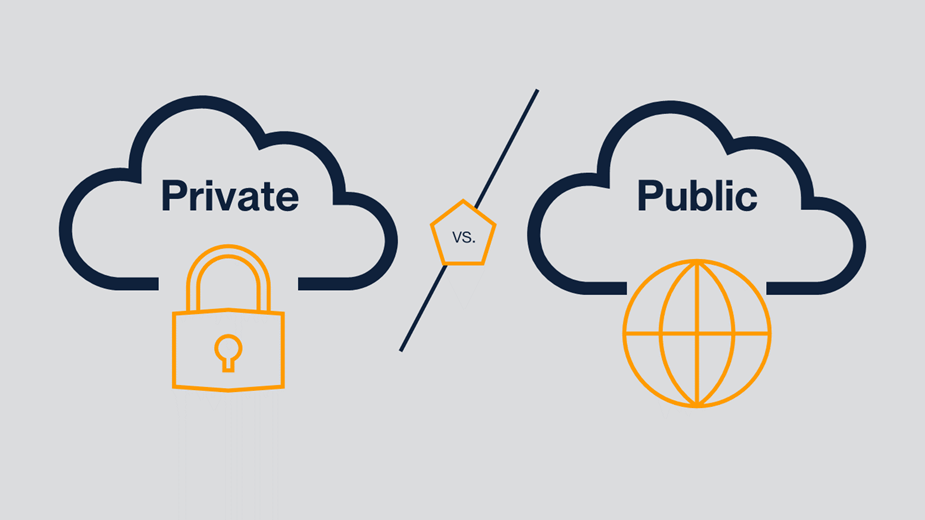
AI extensions build on the operating model of SAP EWM. Which customization and extension options are available depends on whether SAP EWM is operated in the Public Cloud or the Private Cloud, and in which functional scope, Basic or Advanced, it is used.
Anyone planning AI use cases should therefore factor in these decisions from the start.

In automated warehouses in particular, classic rule sets reach their limits. The whitepaper “AI in SAP EWM” illustrates this with a typical Thursday at 2:30 p.m.: a shuttle system goes down, an employee is absent at the same time, and twelve time-critical rush orders have a cut-off at 8 p.m.
Where classic SAP EWM rule sets reach their limits, and where AI can already make a difference today, is the core of this reality-check scenario.
Qinlox helps companies assess AI potential in SAP EWM and SAP MFS soberly: with in-depth diagnostics, traffic-light qualification and a reality filter that separates real potential from apparent potential.
On this basis, you can decide which use cases are viable and which prerequisites in architecture, data and governance need to be created for them.

In a no-obligation conversation, we work with you to assess whether and where AI can create value in your warehouse logistics beyond the SAP standard. We look at typical areas of potential, your data situation and the conditions of your system landscape.
Have questions? In the following FAQs, we have compiled the most important answers for you. If your question is not included, please feel free to contact us directly.
Where a problem occurs frequently, has measurable economic consequences, sufficient structured data is available and the SAP standard does not already cover the need. Typical areas of potential are error detection and root cause analysis, prioritization, workforce and capacity planning, early detection of bottlenecks and risk-based quality assurance.
First, check whether the SAP standard or an SAP-native agent covers the need. If a relevant gap remains, Joule Studio or a custom extension on SAP BTP may make sense. The closer a solution stays to the standard, the lower the effort and risk usually are.
With each level of autonomy, responsibility shifts. It should therefore be settled in advance, for example through an agent registry, clearly assigned roles and a review routine before responsibility is handed over. The EU AI Act sets the framework for this. This does not replace legal advice.
Yes. All three Executive Whitepapers can be downloaded free of charge.
Discover the latest analyses, articles, and perspectives on SAP, supply chain, and business transformation. Practical knowledge – directly from our consultants for your business.