
Quality Management in SAP EWM – Efficient, Integrated and Automated
Quality management in modern warehouses requires more than isolated inspections. SAP Extended Warehouse Management (SAP EWM) enables companies to embed quality inspections directly into warehouse processes. This ensures transparent execution, consistent documentation, and structured handling of inspection results across all logistics activities.

Quality Inspections in SAP EWM
SAP EWM supports quality inspections directly within inbound, outbound, and internal warehouse processes. By integrating SAP QM, quality inspection lots can be created, processed, and documented seamlessly within SAP EWM.
Integration of SAP QM and SAP EWM
SAP EWM integrates smoothly with the SAP QM component. Quality inspections can be triggered automatically based on inspection types, ensuring standardized processes and consistent execution of quality checks throughout the warehouse.
Automated Follow‑Up Actions
Depending on the inspection result, SAP EWM automatically triggers follow‑up processes such as stock transfer, blocking, scrapping, or returns. This ensures fast reaction times and prevents non‑conforming products from entering subsequent logistics processes.
Introduction and Importance of Quality Management
Quality management is an essential part of warehouse logistics, with a direct impact on efficiency, costs, and customer satisfaction. Incorrect deliveries, damaged goods, or a lack of transparency in quality processes negatively affect business performance.
To ensure that quality inspections are traceable, efficient, and well structured, SAP Extended Warehouse Management (SAP EWM) fully integrates quality management into operational warehouse processes. Unlike purely ERP‑driven inspections, quality checks take place where goods are physically handled – directly in the warehouse.
SAP EWM supports different technical approaches for implementing quality management, allowing companies to choose the model that best fits their system landscape and operational requirements.
Quality Models in SAP EWM
SAP EWM supports two different quality management models, depending on system architecture and business needs.
1. Integrated QM (with ERP QM module)
In integrated QM scenarios, the SAP QM module in ERP acts as the leading system.
- SAP EWM does not create its own inspection document
- ERP QM creates the inspection lot directly
- Usage decisions are made centrally in ERP
- Typical scenario: Embedded SAP EWM in S/4HANA
2. Standalone QM (via the Quality Inspection Engine)
Standalone QM is available only in decentralized SAP EWM and is based on the Quality Inspection Engine (QIE).
- SAP EWM creates its own inspection document
- Usage decisions and follow‑up actions are handled entirely within EWM
- No mandatory dependency on the ERP QM module
- Maximum flexibility and system autonomy
SAP EWM Quality Management Explained
To model quality management processes in a structured and system‑controlled way, SAP EWM works with several core QM objects. These form the functional and technical foundation for inspections, decisions, and follow‑up actions in the warehouse.
Core QM Building Blocks
Inspection object types
Define which quality process is executed – for example inbound inspection, internal inspection, returns inspection, or an unplanned quality event.
Inspection rules
Control whether an inspection document is created, which inspections are required, and which usage decisions are allowed. They define the rule‑based logic for automated QM processes.
Inspection document (decentralized SAP EWM only)
In decentralized EWM, the Quality Inspection Engine (QIE) creates an inspection document. It serves as the basis for the entire quality process in EWM – from inspection to follow‑up actions.
Inspection lot (embedded SAP EWM only)
In embedded scenarios, the inspection lot is created directly by ERP QM. SAP EWM acts as the process integrator and trigger for quality inspections in the warehouse.
These objects allow precise definition of inspection obligations, inspection parameters, and system‑driven follow‑up actions, aligned with both the system architecture and business requirements.
Why integrated quality management in the warehouse matters
- Integrated quality management in the warehouse reduces error rates and sustainably increases customer satisfaction.
- SAP EWM enables fully system‑controlled, transparent, and audit‑ready quality processes directly within operational warehouse execution.
- Companies benefit from clearly defined inspection processes, automated usage decisions, and efficient follow‑up actions across the entire quality workflow.

Quality Process in SAP EWM – Step by Step
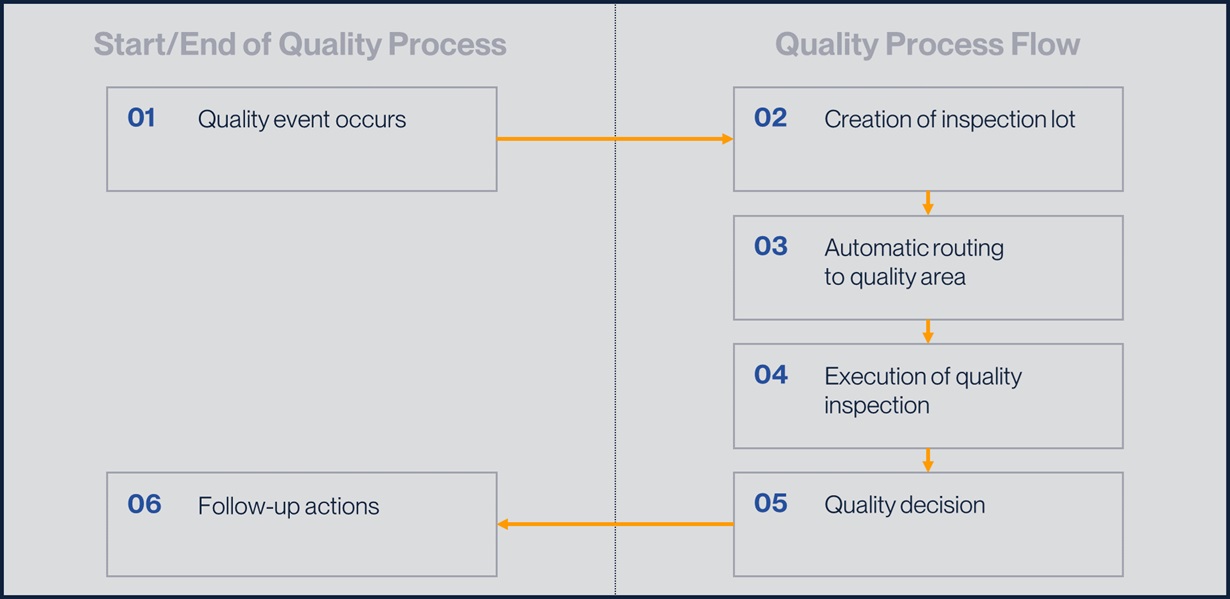
1. Quality Event Occurs
Examples:
- goods receipt
- stock transfer
- internal movement
- customer return
2. Inspection Lot Creation
Inspection lot or inspection document is created automatically based on inspection rules.
3. Automatic Routing to Quality Area
Goods are routed to the defined quality inspection area using warehouse process types and determination logic.
4. Execution of Quality Inspection
Inspection steps may include:
- visual inspection
- quantity check
- damage assessment
- sampling procedures
5. Usage Decision
Typical decisions include:
- accept
- restrict
- block
- scrap
6. Automated Follow‑Up Actions
Based on the usage decision, SAP EWM automatically triggers:
- stock posting
- blocking
- scrapping
- returns processing
Embedded vs. Decentralized EWM: Which Model Fits Which QM Scenario?
The choice of the EWM architecture has a significant impact on how quality processes are implemented technically – in particular, whether quality handling is driven directly by ERP QM or managed independently within EWM. The following table provides a compact overview of the key differences.
Conclusion
Quality management with SAP EWM enables companies to embed quality inspections directly into warehouse execution. By combining transparency, automation, and process integration, SAP EWM ensures consistent quality control without disrupting logistics flows.
In short: Quality management becomes a natural part of warehouse operations – not a separate process.
FAQs
The following questions provide a concise overview of quality management in SAP EWM and explain how integrated quality inspections enhance transparency, efficiency, and process reliability.
Using custom exception codes, SAP EWM can trigger unscheduled quality inspections, for example in the case of damage or shortage situations.
Inspection rules define which criteria or events trigger a quality inspection and which parameters apply.
Yes. Planned inspections are based on master data or process definitions. Unplanned inspections are event‑driven, for example in the case of damages.
The QIE enables standalone quality management within decentralized SAP EWM. This allows QM processes to be handled independently of the SAP QM module while still integrating quality inspections directly into warehouse processes.