Integrating mobile robotics directly into SAP EWM processes
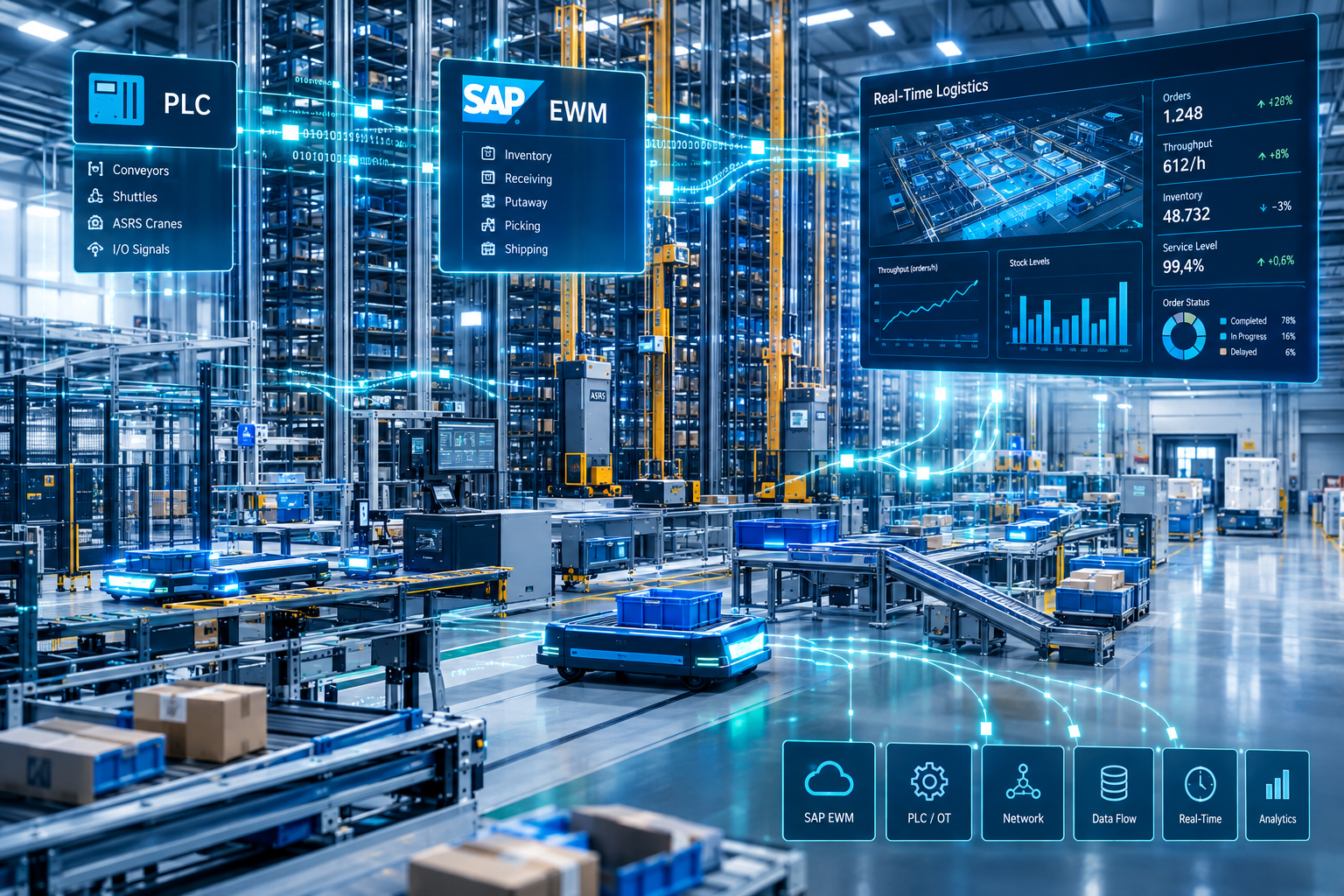
SAP Warehouse Robotics extends SAP Extended Warehouse Management as an add-on with an orchestration layer for mobile robotics.
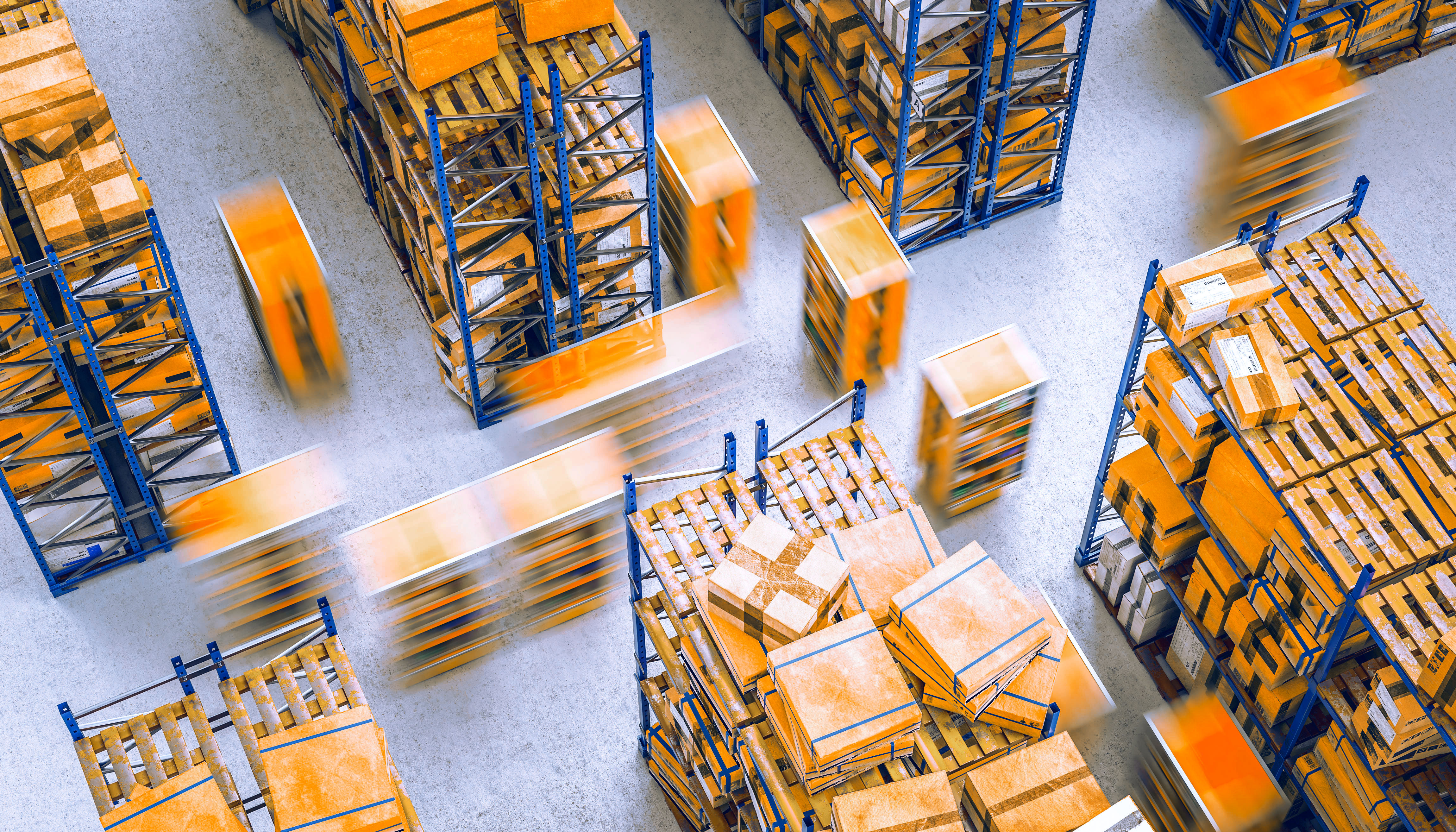
Autonomous mobile robots (AMR) or automated guided vehicles (AGV) are embedded directly into SAP EWM processes – SAP EWM remains the leading control and decision-making system.
This page positions SAP Warehouse Robotics and shows in which context robotics can be meaningfully applied within the SAP EWM environment.
SAP Warehouse Robotics is a solution based on the SAP Business Technology Platform (BTP) for integrating mobile robotics into SAP EWM.
It is not used for direct robot control, but for the orchestration of robotic tasks within warehouse processes.
SAP EWM is responsible for:
SAP Warehouse Robotics provides the coordination layer between SAP EWM and robot fleets.
SAP EWM remains the process-leading system and is responsible for the definition, prioritization, and monitoring of warehouse tasks.
SAP Warehouse Robotics orchestrates the robotic execution by assigning tasks to mobile robots, monitoring execution, and returning status and exception messages to SAP EWM in real time.
Physical movements are executed by the robot fleets, while:
remain entirely within SAP EWM.
This ensures that robotics is not an isolated subsystem, but an integrated part of SAP EWM warehouse processes.
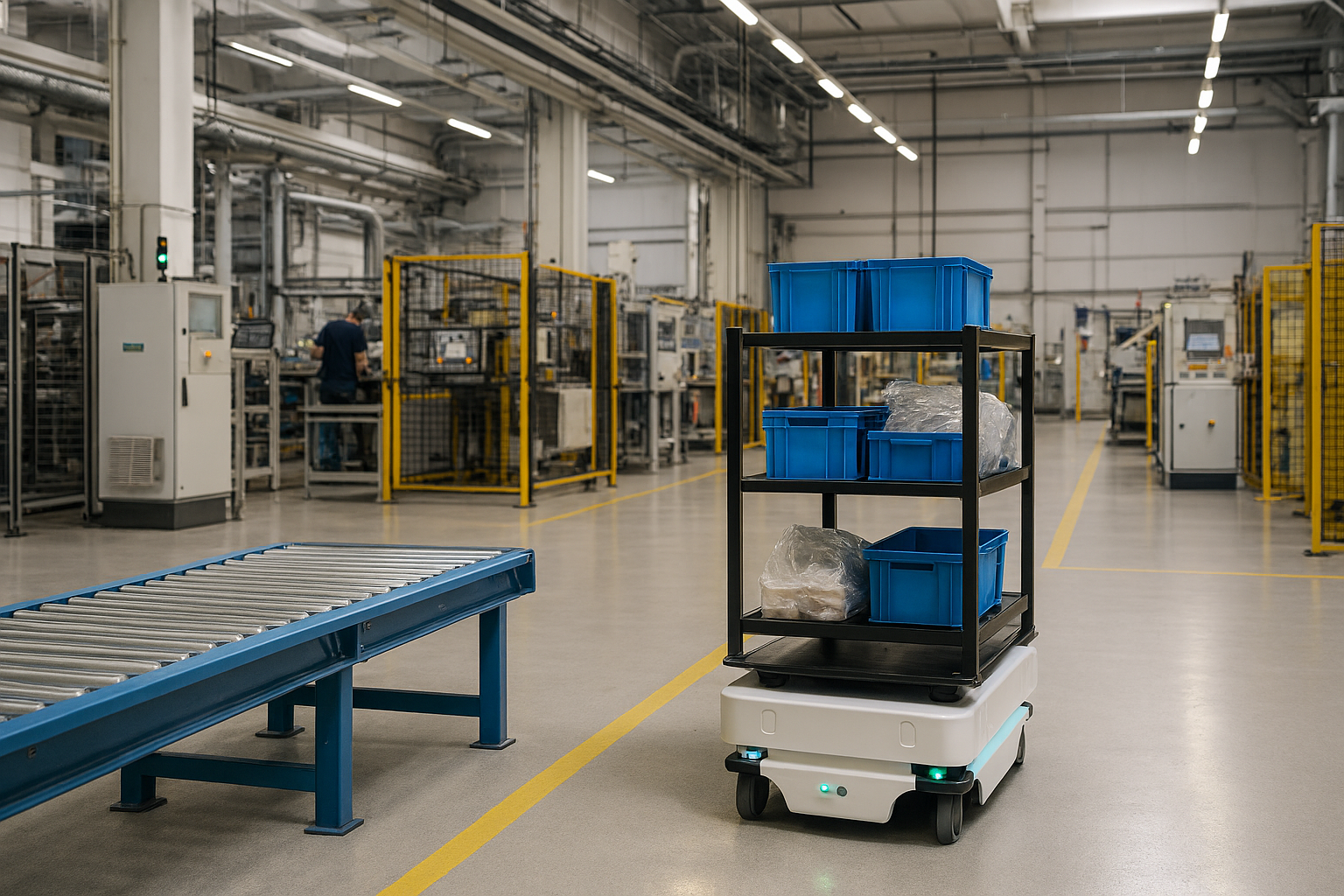
SAP Warehouse Robotics integrates mobile robots as executing resources directly into SAP EWM process logic.
While SAP EWM defines, prioritizes, and monitors tasks, robots perform the physical execution. This enables a flexible automation layer, particularly suited for dynamic and evolving warehouse environments.
Typical use cases include:
In these scenarios, SAP Warehouse Robotics enables high adaptability without major structural or infrastructure changes, as mobile robots can be flexibly integrated into existing processes.
In addition to mobile robotics, many warehouse and production logistics environments also use stationary robot-supported workstations.
These include:
In such scenarios, products or layers are typically processed rather than entire handling units being moved.
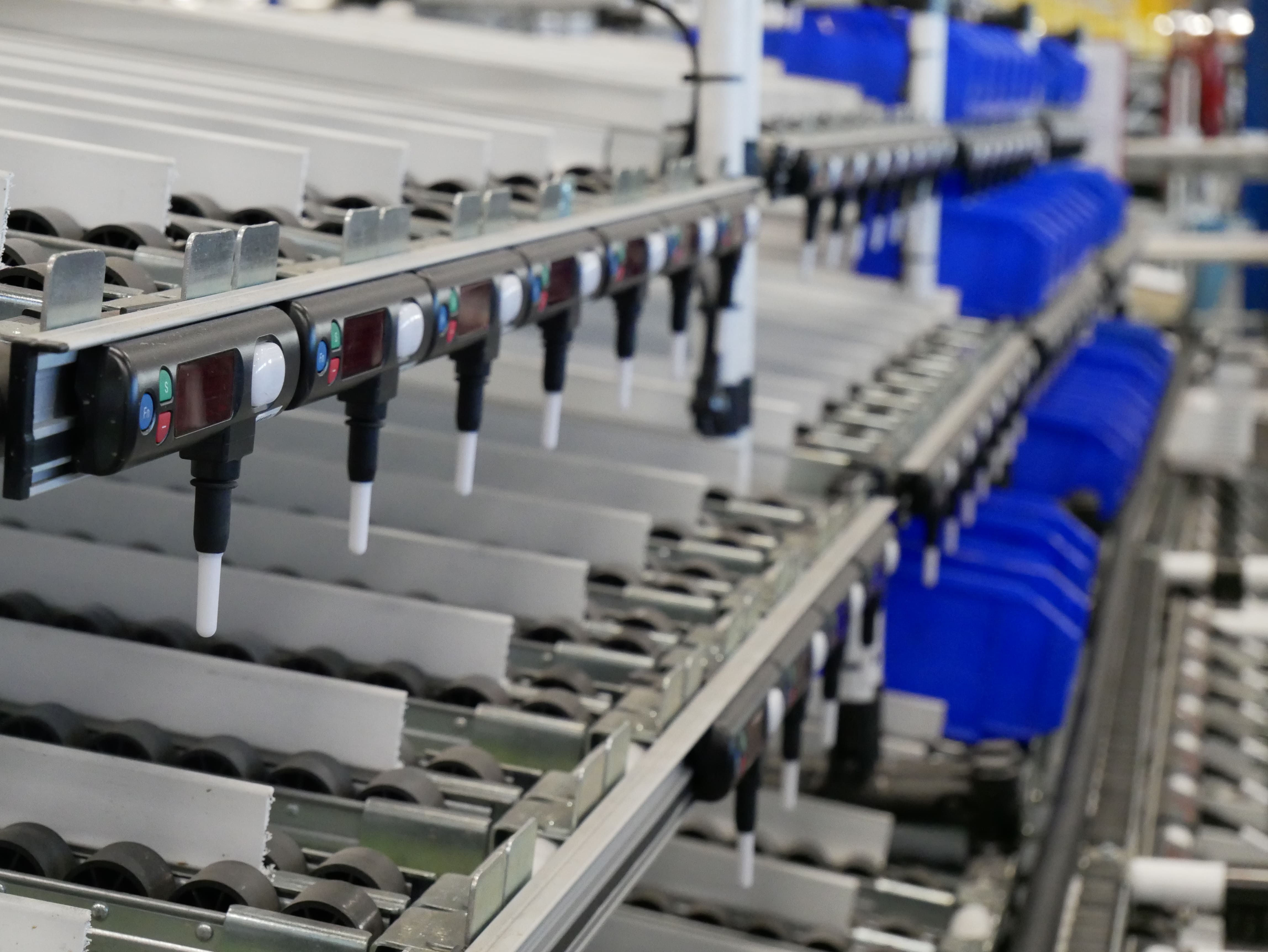
These stationary robotic workstations are usually tightly integrated into conveyor and material flow structures and are typically controlled and monitored via SAP EWM – often in combination with SAP EWM MFS.
SAP EWM remains the central control system, while robots and control technology execute physical movements.

SAP Warehouse Robotics is designed as a vendor-neutral orchestration layer.
The integration of heterogeneous robot fleets is possible, depending on interfaces, standards, and architectural decisions.
SAP EWM MFS:
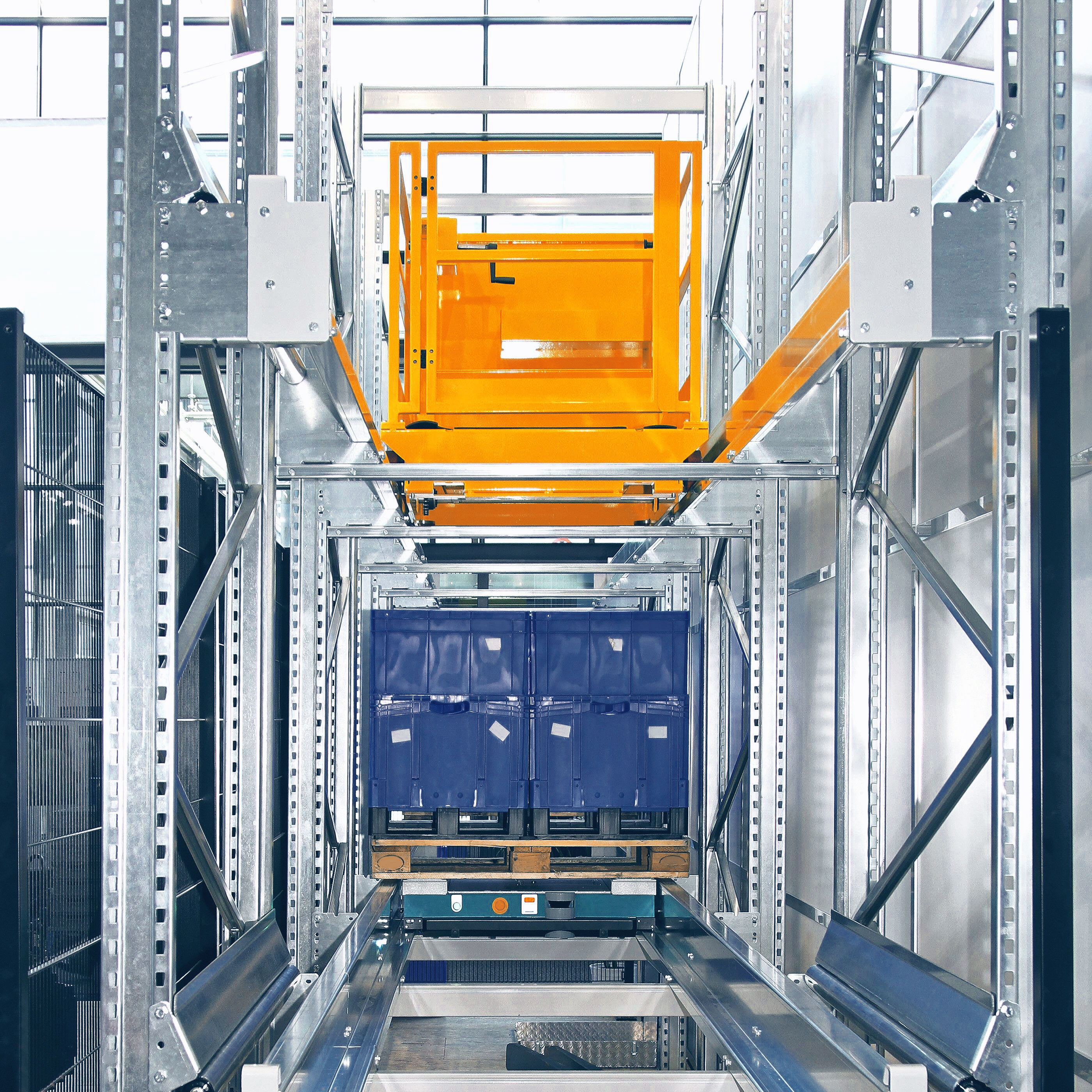
stationary, high-performance automation
SAP Warehouse Robotics:
mobile, flexible automation
In many scenarios, the greatest value is achieved through a combination of SAP EWM MFS and SAP Warehouse Robotics, orchestrated by SAP EWM.
SAP Warehouse Robotics is not a replacement for material flow control, but a flexible complement.
Its value lies in the orchestration of mobile robotics and the gradual automation of dynamic warehouse environments.
Stationary, high-performance, and real-time-critical automation is typically implemented via SAP EWM Material Flow Control (MFS).
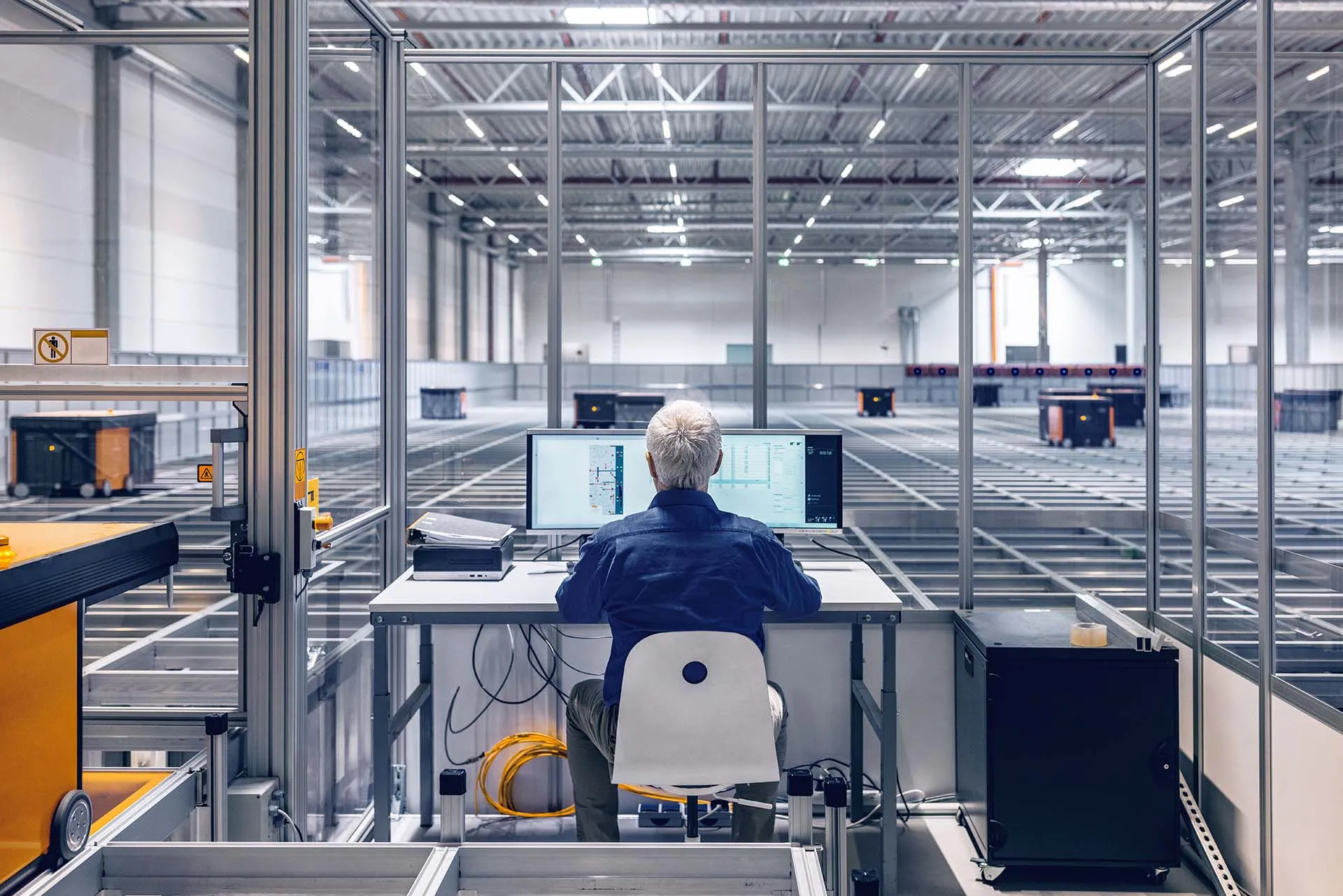
We support companies in the classification, evaluation, and integration of robotics solutions within the SAP EWM environment – structured, architecture-consistent, and future-proof.
Do you have questions? The following FAQs summarize the most important answers. If your question is not covered, feel free to reach out to us directly.
No. Warehouse Robotics and MFS address different automation layers.
MFS controls stationary automation, while Robotics covers mobile automation.
SAP Warehouse Robotics is based on SAP BTP and requires a cloud connection.
The specific use depends on architecture and security requirements.
SAP Warehouse Robotics is designed as an orchestration layer and can integrate different robotics systems – depending on interfaces and approvals.
When flexibility, frequent changes, and step-by-step automation are more important than maximum throughput.
Yes. In many modern warehouse environments, stationary material flow control and mobile robotics complement each other effectively.
Discover the latest analyses, articles, and insights on SAP, supply chain, and business transformation. Practical knowledge – directly from our consultants for your business.