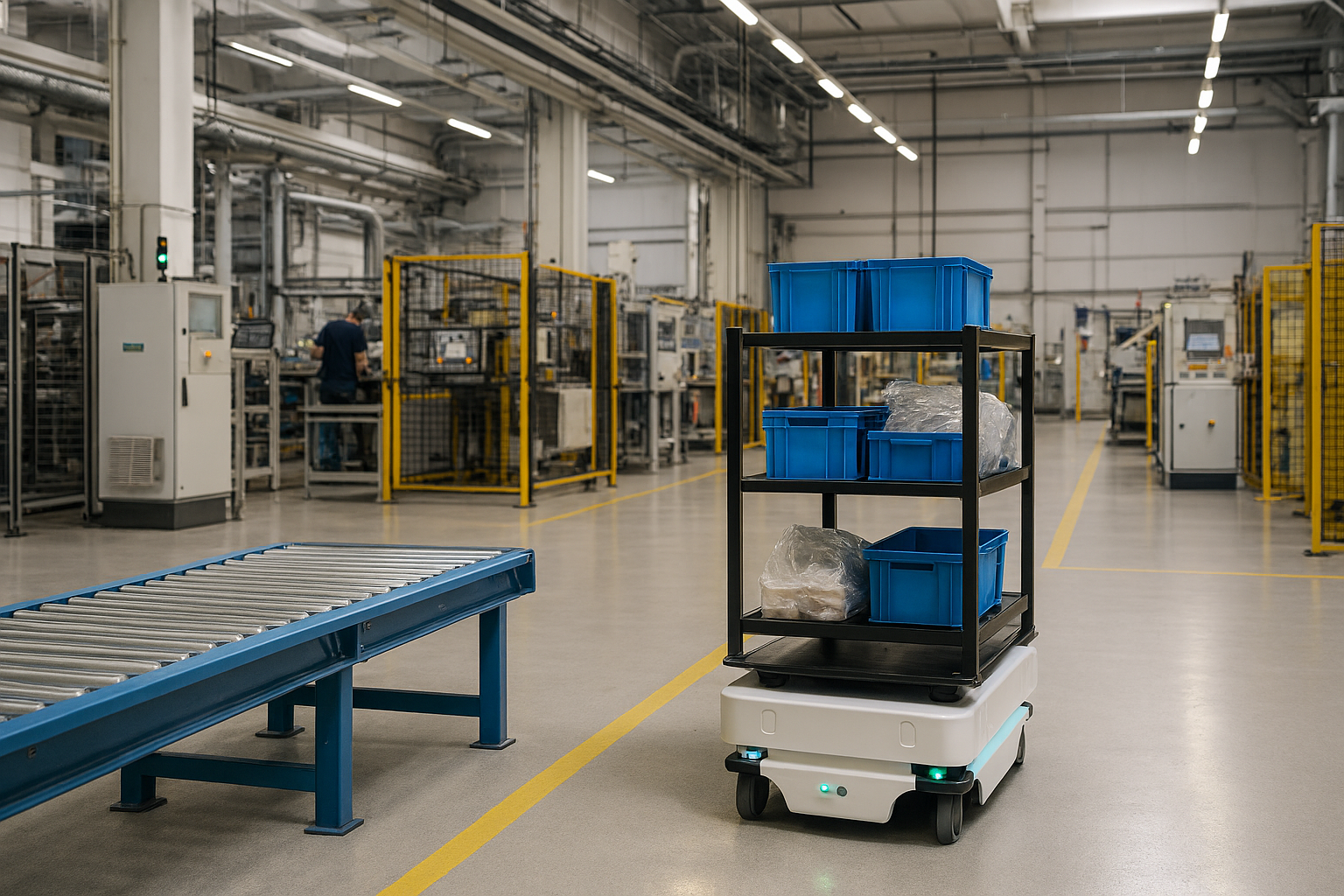
Control automated warehouse technology directly from SAP EWM
Material flow control is the central building block for the integration and control of automated warehouse technology in the SAP EWM environment.
With SAP EWM Material Flow Control (MFS), SAP EWM takes over the role of an integrated Warehouse Control System (WCS) and controls conveyor technology and automation directly – without additional middleware.
This page positions SAP EWM MFS and explains in which context material flow control is best applied.
SAP EWM Material Flow Control (MFS) is an integral function of SAP Extended Warehouse Management, enabling automated warehouse systems to be connected to and controlled directly from SAP EWM.
SAP EWM MFS provides:
In contrast to traditional warehouse control systems, SAP EWM MFS is not a separate system, but fully integrated into the SAP system landscape.
This allows SAP EWM strategies to leverage all process-relevant data and make decisions within the complete warehouse, process, and ERP context.
SAP EWM Material Flow Control acts as the control and orchestration layer between warehouse processes and physical automation technology.
SAP EWM remains the process-leading system and is responsible for:
The underlying PLC systems execute these decisions physically and return status and exception messages to SAP EWM in real time.
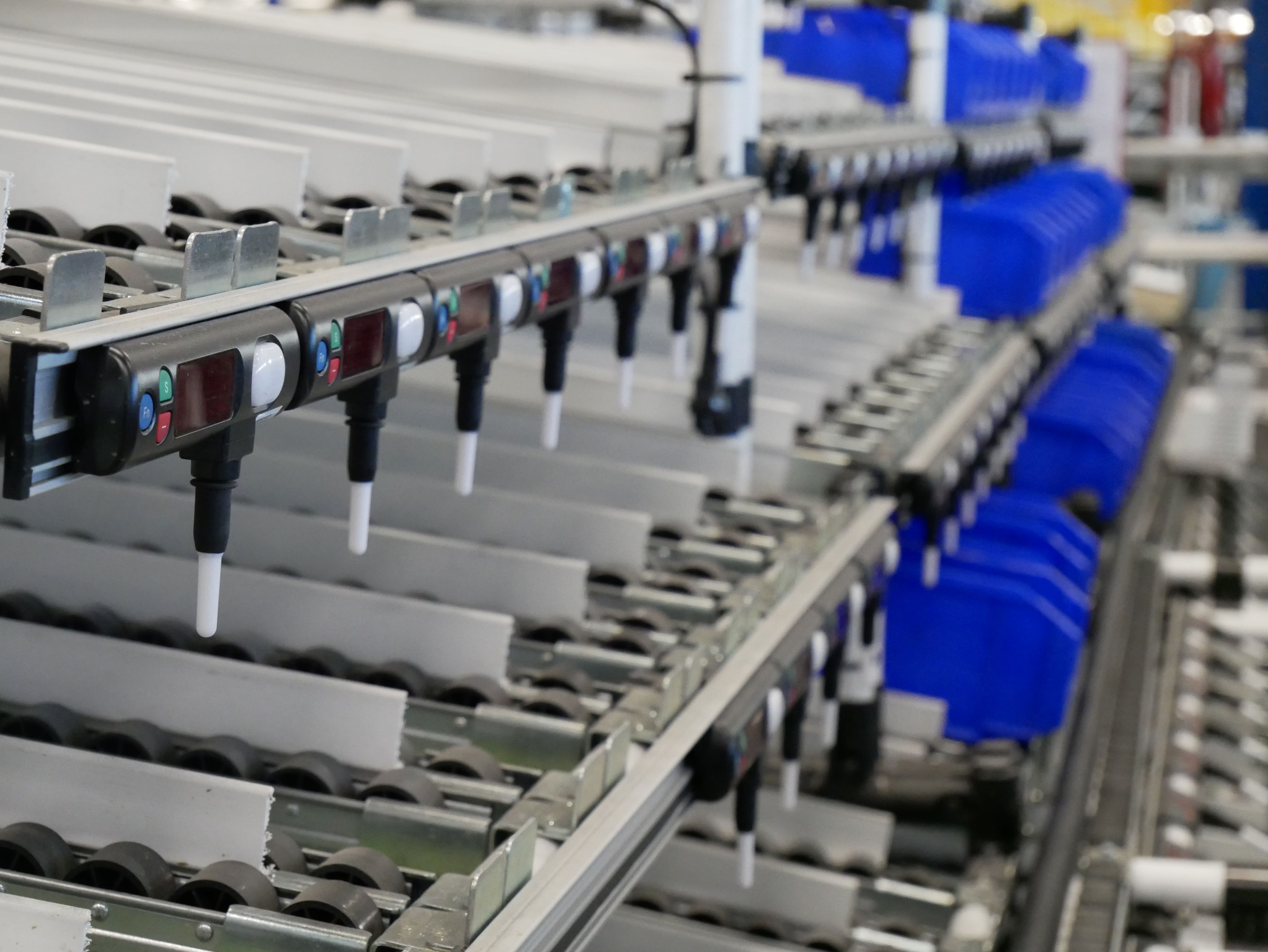
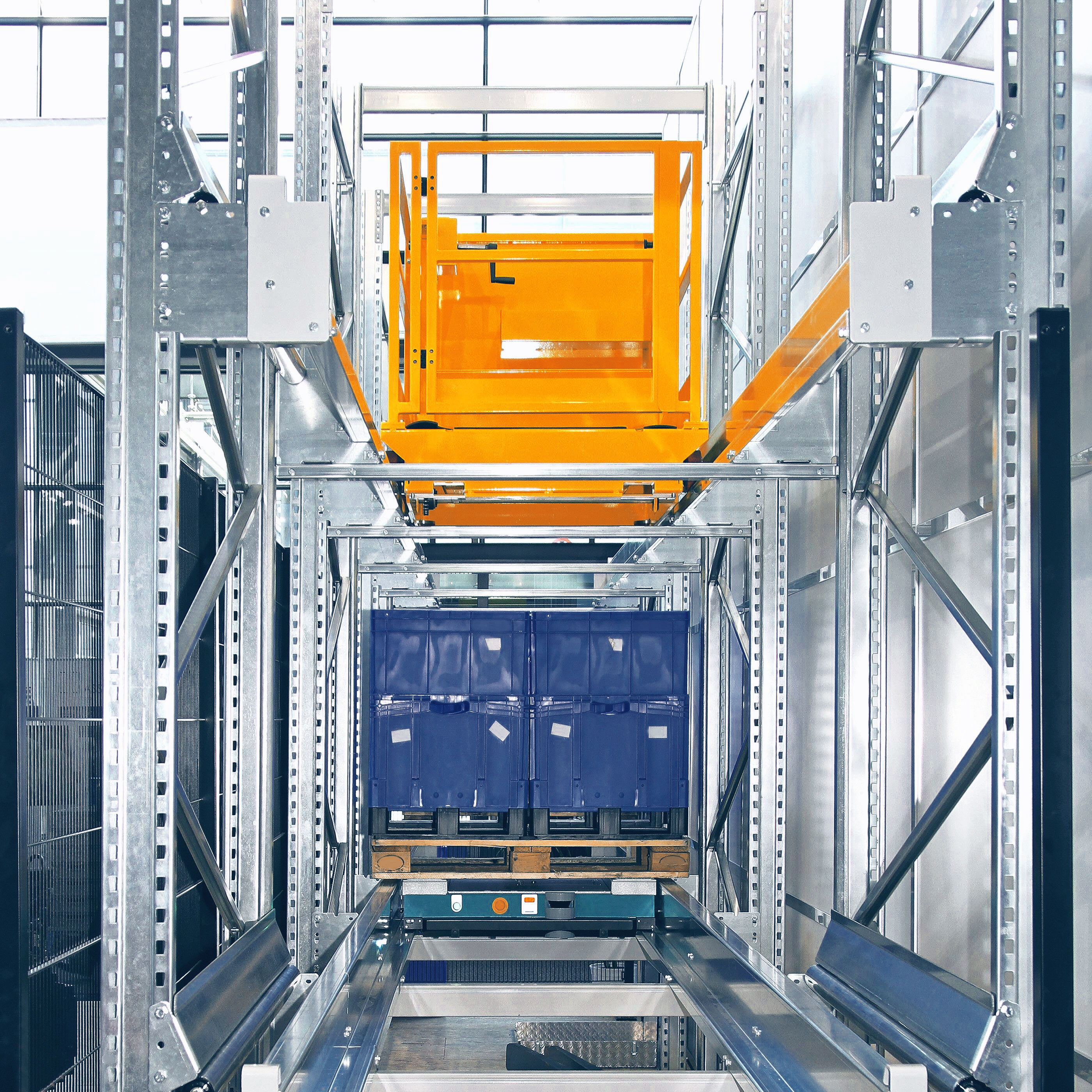
Physical movements are carried out by conveyor systems, stacker cranes, or shuttle systems, while:
remain entirely within SAP EWM.
This allows SAP EWM with MFS to function as an integrated Warehouse Control System (WCS) – without additional middleware and based on a consistent data and process model.
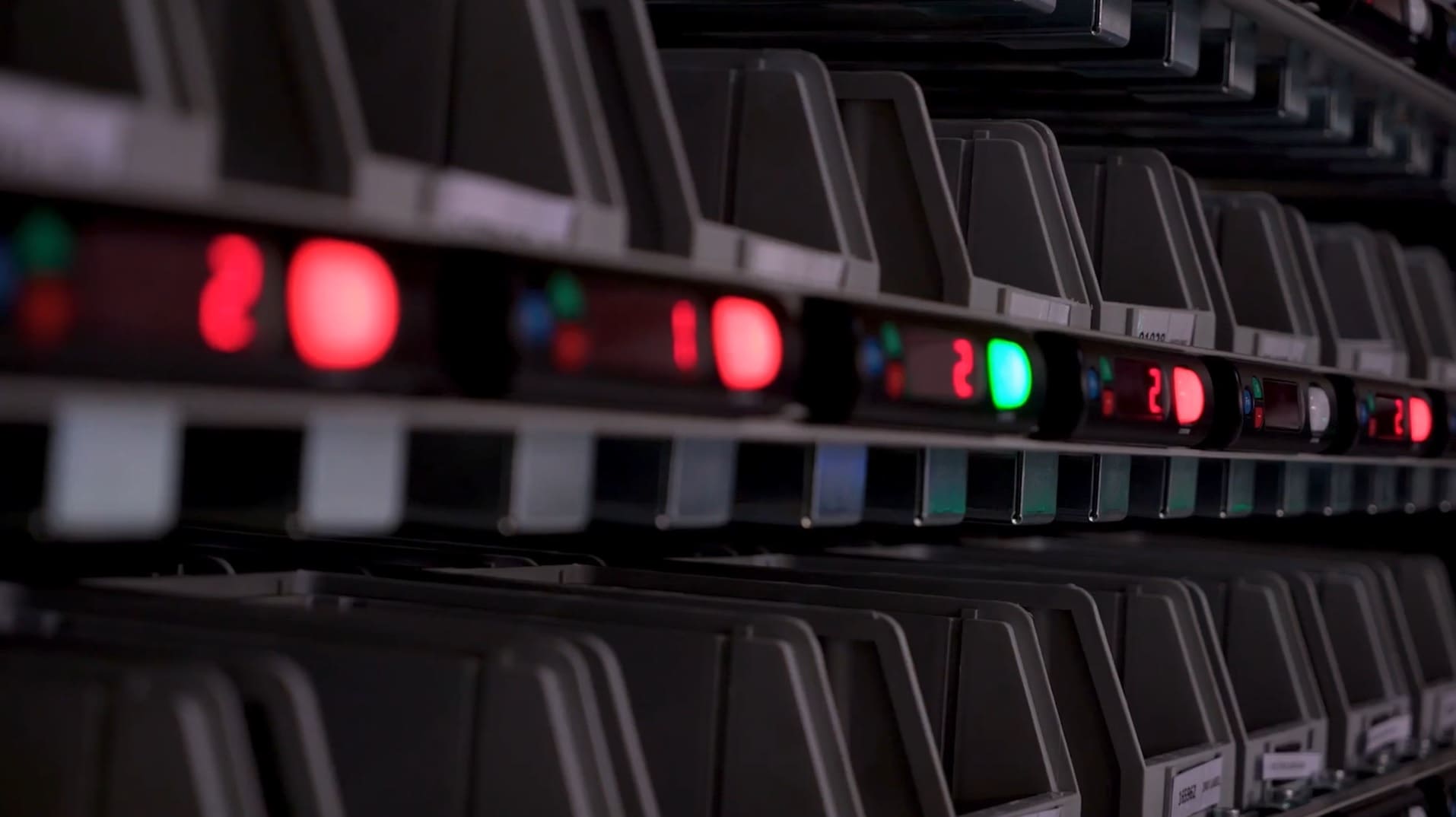
SAP EWM MFS is typically used to control:
Material flow logic is fully modeled, monitored, and controlled within SAP EWM – including routing, strategies, prioritization, and exception handling.
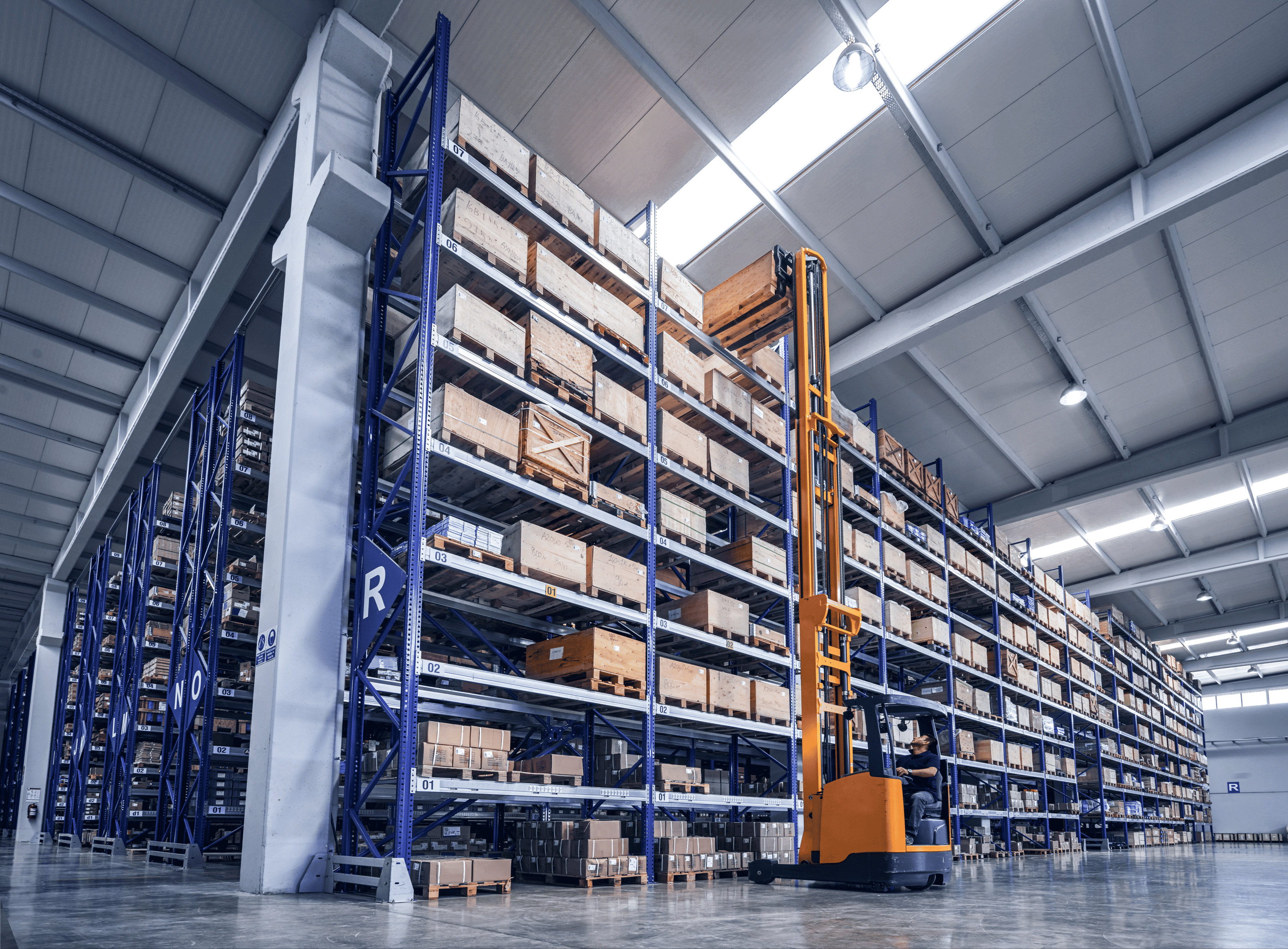
SAP EWM MFS is particularly suitable for stationary, clearly structured automation scenarios, where material flows are well-defined, predictable, and performance-critical.
The control and decision logic remains entirely within SAP EWM, while physical execution is handled by automated warehouse and conveyor systems.
Typical use cases include:
In these scenarios, SAP EWM MFS enables high-performance, stable automation, with clear responsibilities between the SAP system and automation technology, as well as reduced system complexity due to the absence of additional middleware.
No additional middleware, no system breaks, and a consistent data basis fully utilized by SAP EWM strategies for decision-making and prioritization.
Material flows, status messages, and disruptions are directly visible within SAP EWM monitoring.
Fewer interfaces and lower maintenance and operational effort due to the elimination of a separate WCS and direct integration at the PLC level.
SAP EWM MFS has been used productively for years, including in highly automated warehouse environments.

SAP EWM MFS is part of the Advanced functional scope of SAP EWM and therefore requires SAP EWM Advanced.
Available in:
Not available in:
The selection of the appropriate functional scope, architecture variant, and cloud model is therefore a key prerequisite for the successful use of material flow control.
SAP EWM MFS and SAP Warehouse Robotics address different automation layers:
Both approaches are not mutually exclusive, but complement each other within a holistic SAP automation architecture.
SAP EWM Material Flow Control is a proven standard approach for controlling stationary, high-performance automation.
In scenarios with clearly defined material flow paths, MFS provides a stable, transparent, and high-performance solution.
In more dynamic environments – such as those with highly variable material flows or a focus on mobile automation – MFS is not the only solution component. In such cases, SAP Warehouse Robotics or additional automation and simulation frameworks are used—either as an alternative or as a complementary extension.
The use of SAP EWM Material Flow Control is closely linked to key architectural decisions:
Successful material flow control therefore requires a solid architecture, cloud, and licensing decision.
SAP EWM Material Flow Control is not an optional add-on, but an Advanced capability that realizes its full potential only in combination with tailored strategies aligned to specific automation layers.
Architecture, cloud, and licensing decisions determine whether MFS can be used at all. The strategic use within SAP EWM determines how much automation potential is actually realized.

We support companies in the positioning, design, and implementation of SAP-based material flow control – from the appropriate functional scope to the strategic use of MFS capabilities in complex automation scenarios.
Do you have questions? The following FAQs summarize the most important answers. If your question is not covered, feel free to reach out to us directly.
No. SAP EWM MFS is part of the Advanced functional scope of SAP EWM.
Embedded EWM Basic is not sufficient for material flow control.
No. SAP EWM Material Flow Control is not available in SAP S/4HANA Public Cloud.
It can only be used in Private Cloud or on-premise scenarios with SAP EWM Advanced.
From a functional perspective, SAP EWM MFS takes over the role of an integrated Warehouse Control System (WCS).
However, it does not replace the physical control layer, but controls automated processes directly within SAP EWM.
SAP EWM MFS is particularly suitable for stationary, high-performance automation scenarios with clearly defined material flows and high throughput – such as high-bay warehouses, shuttle systems, or conveyor-based environments
Yes. Material flow control and robotics address different automation layers and can be effectively combined, provided that architecture and licensing allow it.
Yes. SAP EWM MFS can fully replace the role of a traditional WCS.
A separate WCS software layer is no longer required, as SAP EWM MFS connects directly to the PLC layer and handles control and decision logic within the SAP system.
Discover the latest analyses, articles, and perspectives on SAP, supply chain, and business transformation. Practical knowledge – directly from our consultants for your business.