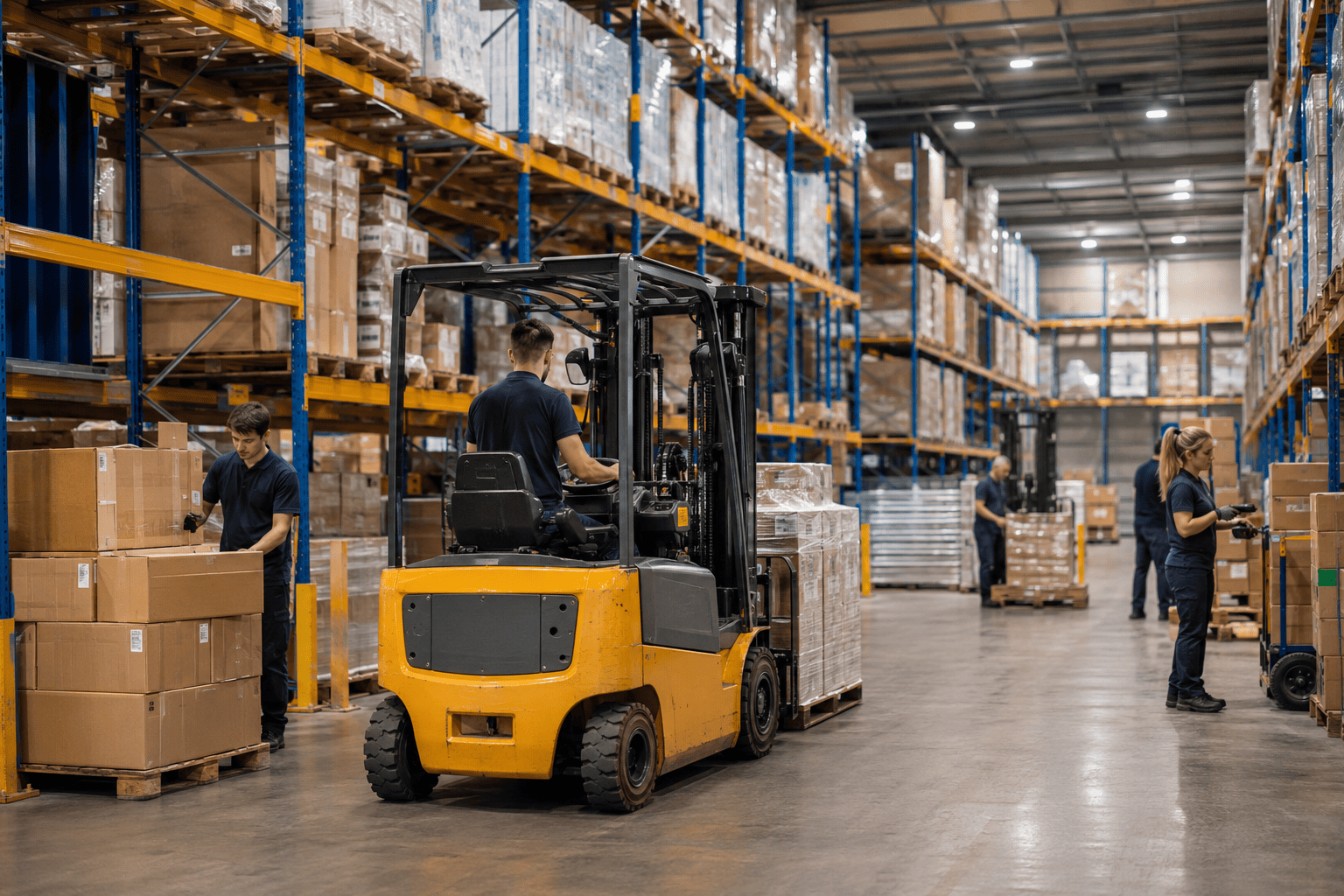
SAP Logistics Management combines Warehouse Logistics, Transportation Logistics and Network Logistics on a shared cloud platform.
Organizations benefit from standardized end-to-end processes, modern user experiences and a future-proof logistics architecture built on SAP Business Technology Platform (SAP BTP).
Modern logistics landscapes are evolving rapidly. Organizations need to onboard warehouse locations faster, standardize processes across sites, improve collaboration with logistics partners and at the same time pursue a sustainable cloud strategy.
SAP Logistics Management (SAP LGM) addresses these challenges by combining Warehouse Logistics, Transportation Logistics and Network Logistics on a shared cloud platform. Rather than focusing solely on warehouse execution, SAP LGM extends the scope towards integrated end-to-end logistics processes.
The platform emphasizes standardized processes, modern user experiences and seamless integration into SAP S/4HANA and SAP BTP environments. This creates an additional option within the SAP logistics portfolio for organizations looking to modernize and harmonize their logistics operations.
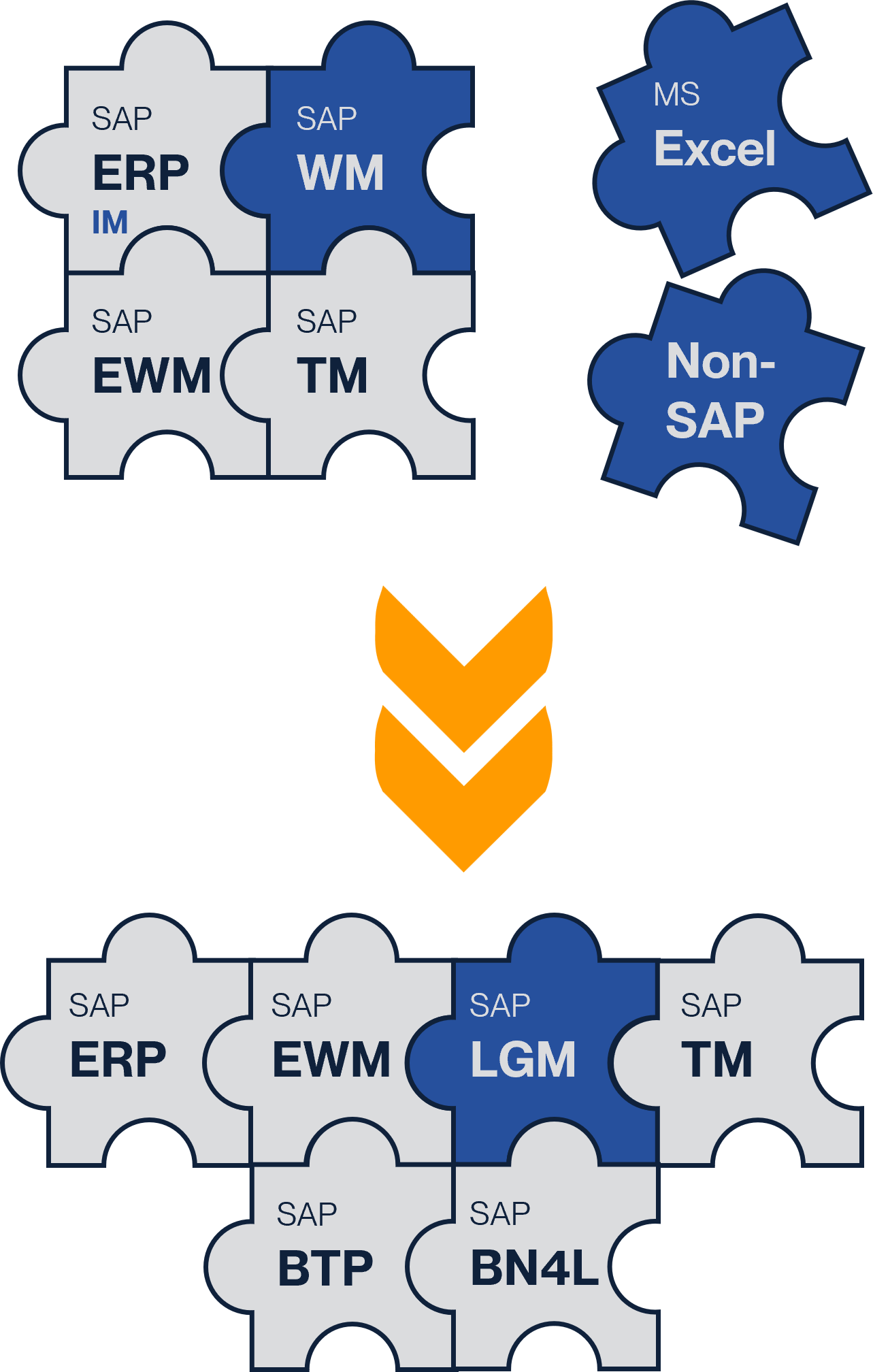
Not every warehouse location requires the same level of functionality. While SAP EWM is designed for highly complex and automated logistics environments, many organizations need an additional option for standardized logistics scenarios.
SAP Logistics Management extends the existing SAP portfolio with a cloud-native platform for warehouse, transportation and network logistics processes.
SAP LGM was not developed to replace SAP EWM. Instead, it extends the SAP portfolio with an additional option for standardized warehouse, transportation and network logistics processes.
With SAP S/4HANA, Stock Room Management, SAP Logistics Management (SAP LGM) and SAP Extended Warehouse Management (SAP EWM), organizations now have multiple options for supporting warehouse and logistics processes.
The right solution depends on process complexity, the level of automation and the requirements of each individual warehouse location.
Not every warehouse requires the same target architecture. While some locations may continue to operate with SAP EWM, SAP LGM or Stock Room Management can be the better fit for other sites.
SAP Logistics Management is not designed for every warehouse or every logistics environment. The platform is particularly relevant where standardized processes, rapid deployment and a harmonized cloud architecture are key priorities.
Whether SAP LGM is the right fit for a specific logistics landscape should always be evaluated based on the requirements of each individual location. Key considerations include process complexity, the level of automation, integration requirements and the long-term target architecture.
Not every warehouse location has the same requirements for processes, automation and system support. Future logistics architectures should therefore not be defined by a single product, but by the specific requirements of each warehouse location.
As a result, many organizations adopt differentiated target architectures in which different solutions fulfill different roles depending on warehouse type.
The key challenge today is not finding a direct successor to SAP WM. Instead, the focus should be on identifying the architecture that best supports the requirements of each warehouse location.
Explore expert insights on SAP Logistics Management, warehouse strategy, target architectures and key decision criteria for SAP WM successor initiatives and SAP EWM evaluations.
Evaluating SAP Logistics Management does not start with selecting a product. It starts with understanding the existing logistics landscape. Different warehouse locations have different requirements when it comes to processes, automation and system support.
Qinlox helps organizations define the right target architecture and assess SAP LGM within the context of existing SAP landscapes and long-term transformation goals.
This transforms a product decision into a structured and reliable foundation for your future warehouse and logistics architecture.

Not every warehouse requires the same solution. Together, we assess your processes, warehouse locations and requirements to develop the right SAP target architecture for your logistics landscape.