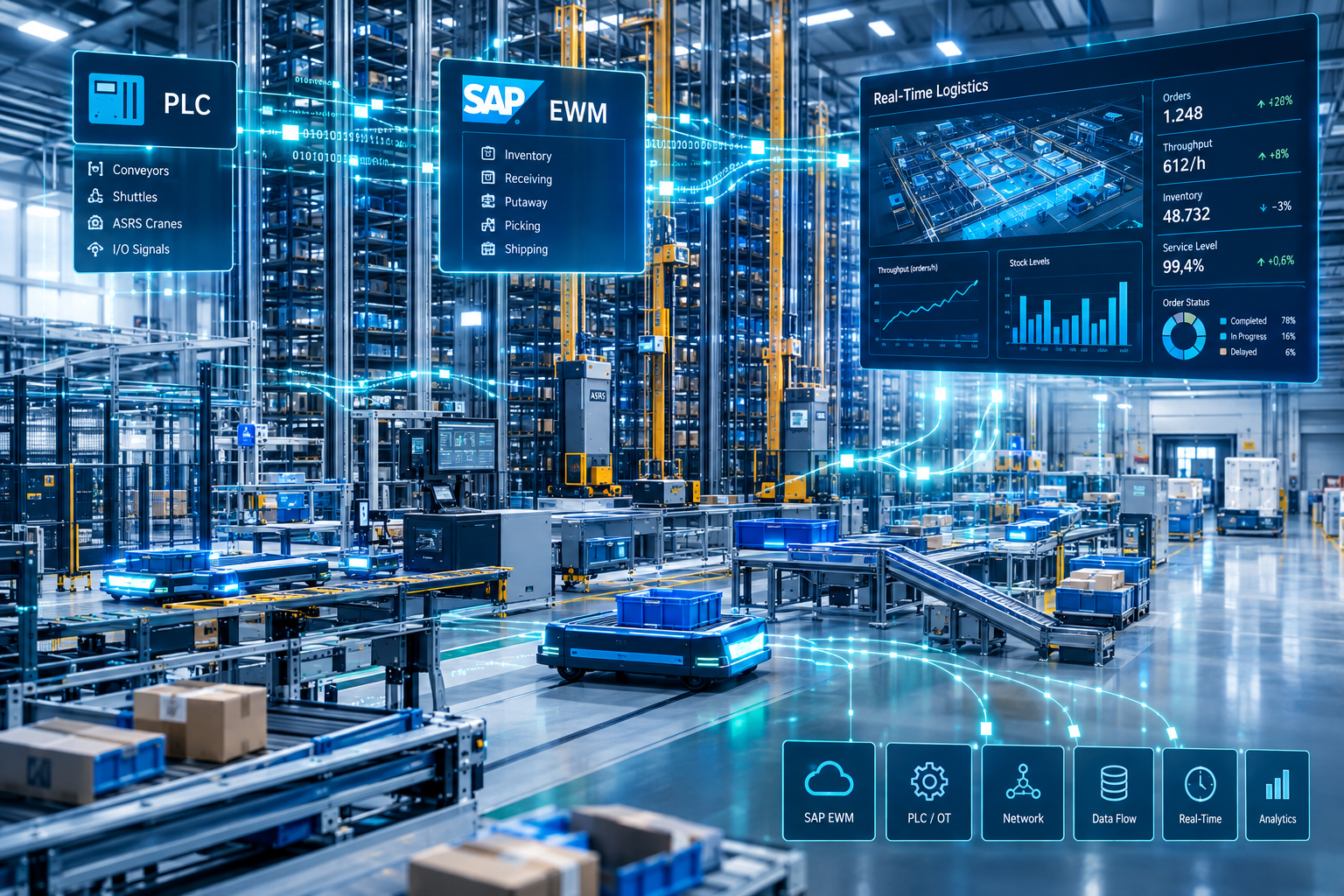
Two Cloud Models – Different Strategic Objectives
SAP Extended Warehouse Management can be deployed in different cloud editions. The choice between Public Cloud and Private Cloud impacts functional scope, extensibility, level of automation, as well as operating and governance models.
This page provides a structured comparison of both cloud models and supports well-informed decision-making.
Public and Private Cloud follow different strategic objectives:
Both models have their place — the decisive factor is the specific use case.
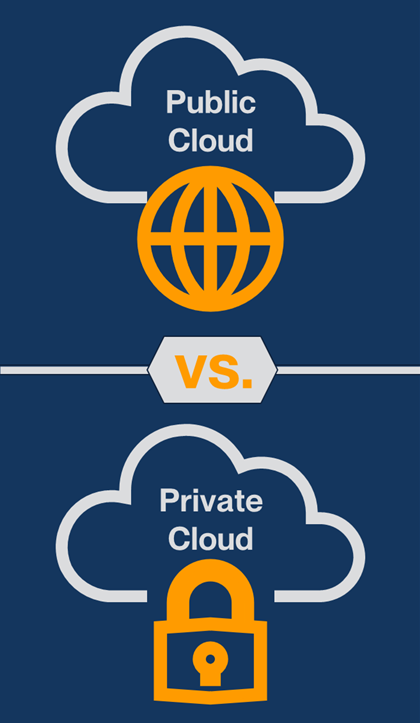
Key takeaway for decision-makers
Public CloudPrivate Cloud is suitable when processes need to be standardized and rapidly deployed.
is the right choice when functional depth, customization, or automation are key priorities.
Public Cloud is suitable when processes can be standardized and need to be quickly productive.
Private Cloud is the preferred option when functional depth, customization, or automation are decisive factors.

The decision between Public and Private Cloud should always be based on process complexity, level of automation, and strategic direction.
The detailed and comparison pages provide a solid foundation for a structured evaluation.
Do you have questions about choosing between Public and Private Cloud?
The following FAQs help position both cloud models and provide structured answers to typical decision questions related to functional scope, automation, extensibility, and strategic fit. The goal is not to provide a generic recommendation, but to make the decision understandable in the right business and logistics context.
Neither option is universally “better.” The right choice depends on the specific logistics context, the preferred operating model, the required process complexity, and the level of automation and integration needed. Public Cloud is well suited for standardized and less complex scenarios, while Private Cloud stands out when greater functional depth and flexibility are required.
Public Cloud is typically the better fit when processes are largely standardized, fast implementation is a priority, and the need for deep customization is limited. It also aligns well with cloud-first strategies focused on standardization, lower operating overhead, and clearly defined governance structures.
Private Cloud is generally the better option when logistics processes are complex, integration-heavy, or highly automated. It provides significantly greater flexibility, an almost complete SAP EWM functional scope, and better conditions for demanding enhancements, performance requirements, and scalable long-term logistics architectures.
In principle, yes, but not without considerable effort. A later move from one cloud model to the other usually has significant implications for processes, enhancements, governance, and system architecture. For that reason, the cloud decision should ideally be made early with medium- and long-term requirements in mind.
Yes, very clearly. Public Cloud reaches its limits relatively quickly in cases of complex automation and highly individualized requirements. Private Cloud is much better suited for automated and performance-critical logistics environments, especially where MFS, advanced integrations, or specific control logic are relevant. The cloud decision is therefore closely tied to the future automation strategy.
They play a central role. Public Cloud is heavily standardized and follows a clearly governed framework with limited extension capabilities. Private Cloud allows much more flexibility, but also introduces a different degree of freedom in terms of enhancements, operational responsibility, and solution design. Companies should therefore evaluate not only functionality, but also governance and operating model implications.
Discover the latest analyses, articles, and perspectives on SAP, supply chain, and business transformation. Practical knowledge – directly from our consultants for your business.