
Key Takeaways at a Glance
Pick-by-Light and Pick-by-Voice pursue the same goal: reducing picking errors, supporting warehouse operators, and improving productivity. However, the right choice depends heavily on warehouse layout, travel distances, SKU structure, and workforce requirements.

Pick-by-Light Excels in High-Density Picking Areas
Light-guided picking is particularly effective in environments with high pick frequency and short travel distances.
Pick-by-Voice Performs Well with Long Travel Distances
Voice-guided workflows often provide advantages in large warehouse environments where operators cover long distances and need hands-free operation.
Alternative Technologies May Also Be Suitable
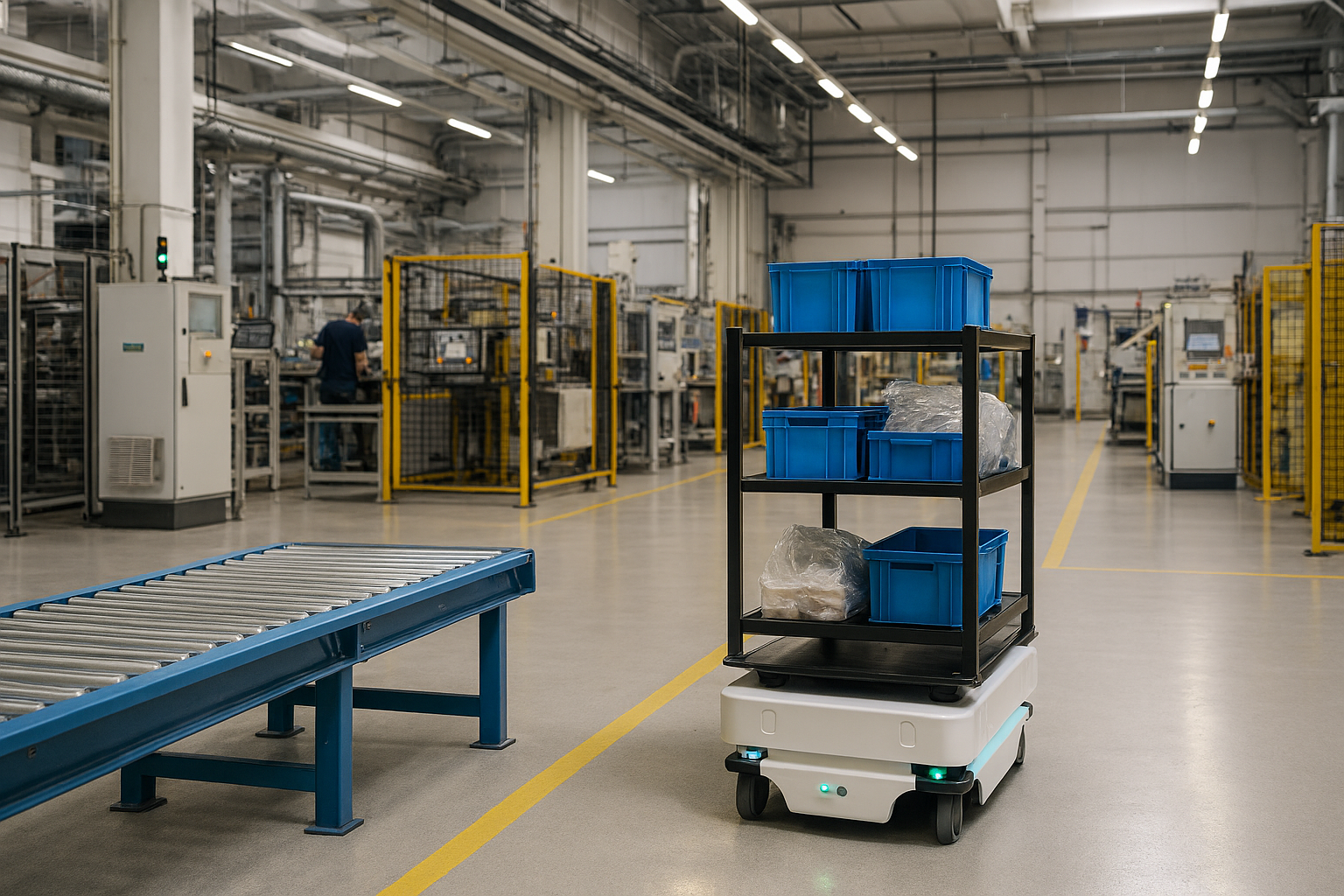
Pick-by-Vision, Pick-by-Motion, and robotics can be valuable alternatives or complementary technologies depending on warehouse requirements.
Why Choosing the Right Picking Technology Matters
Picking is one of the most labor-intensive and business-critical processes in warehouse operations. Picking errors, unnecessary travel distances, and insufficient transparency can directly impact productivity, service levels, and operating costs.
To address these challenges, many organizations implement technology-supported picking solutions. Among the most widely adopted approaches are Pick-by-Light and Pick-by-Voice. Both technologies support operators during the picking process, but they differ significantly depending on warehouse layout and operational requirements.
The key question is therefore not which technology is generally better, but which solution best fits the warehouse structure, workforce requirements, and process environment.
For an overview of modern picking strategies, see our related article:
“Optimizing Warehouse Picking with SAP EWM: Faster, More Accurate, and More Efficient Processes”
What Is Pick-by-Light?
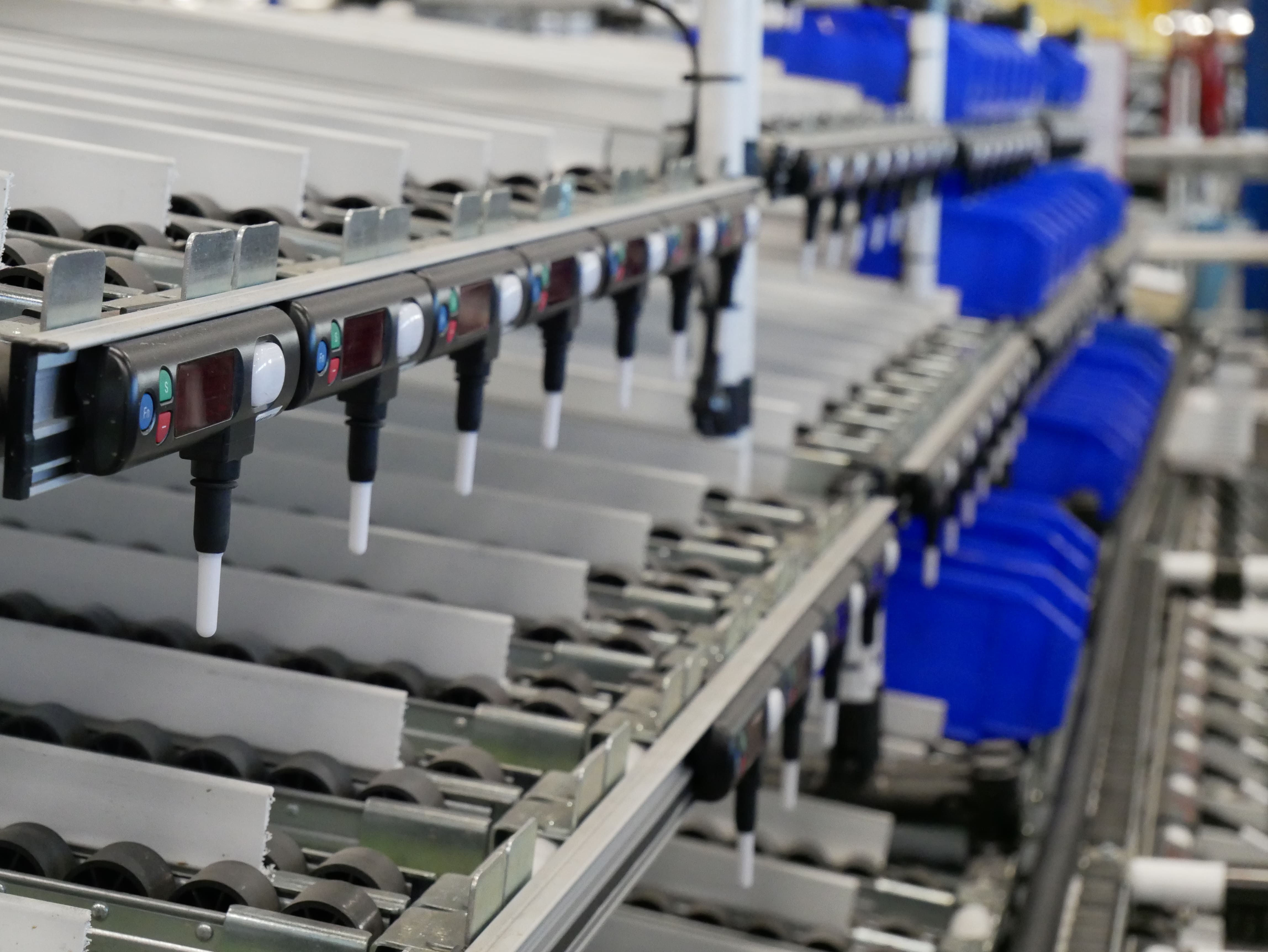
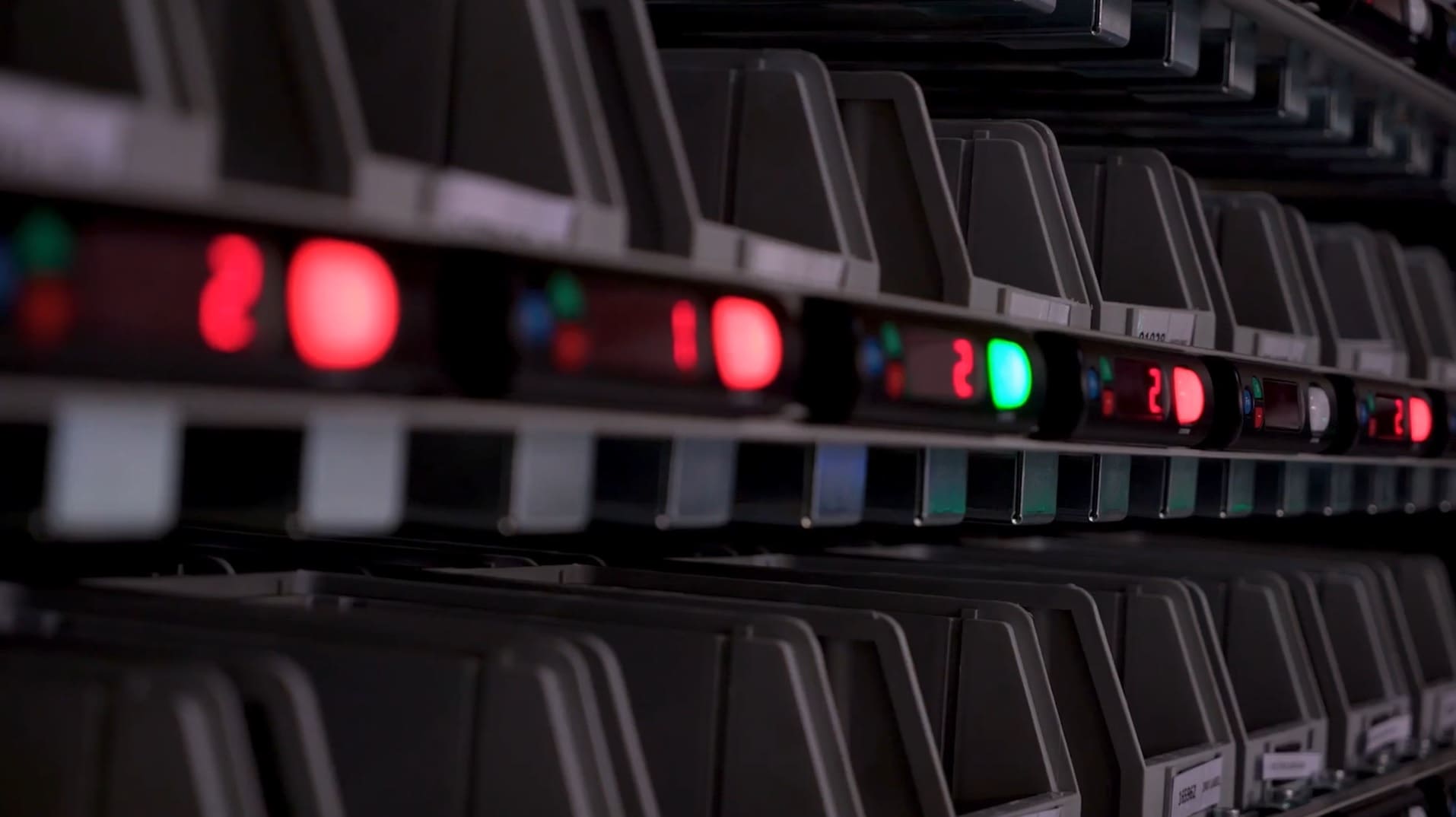
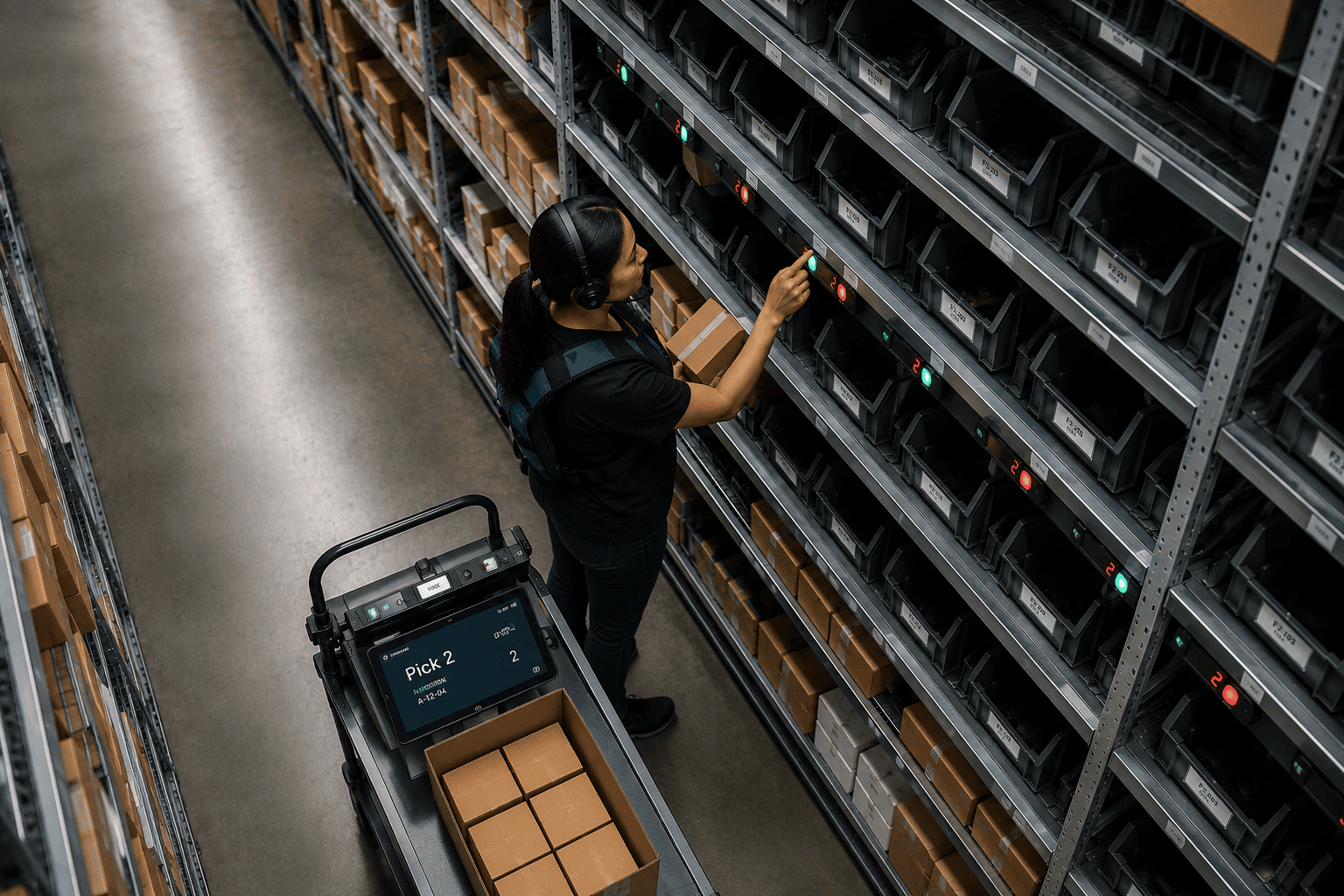
In Pick-by-Light environments, storage locations are equipped with light modules. Operators receive picking instructions directly at the storage location and confirm completed picks using the light module.
The technology is particularly effective in warehouse environments with high pick density, short travel distances, and repetitive workflows.
More information on use cases, integration architectures, and implementation approaches can be found on our
SAP EWM Pick-by-Light solution page.
Typical Benefits
- High process stability
- Reduced error rates
- High picking performance
- No additional mobile devices required
Typical Use Cases
- Container storage areas
- Spare parts logistics
- eCommerce fulfillment
- High-frequency picking zones
What Is Pick-by-Voice?
With Pick-by-Voice, operators receive instructions through a headset and confirm activities via voice commands. This enables hands-free and eyes-free operation.
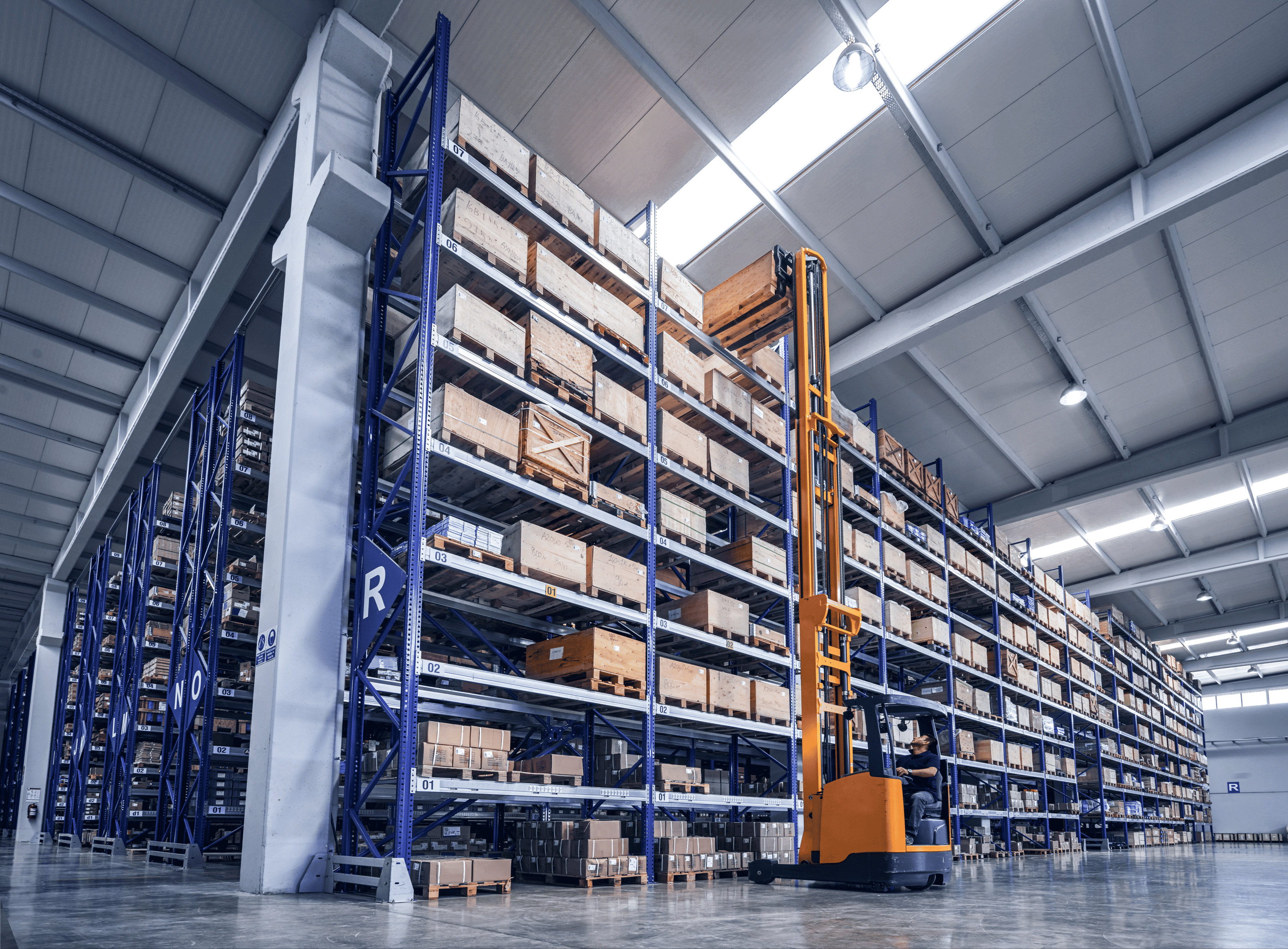
The technology is particularly effective in large warehouse environments with long travel distances.
Typical Benefits
- Hands-free operation
- Eyes-free workflows
- Strong performance in large warehouse areas
- High user acceptance in daily operations
Typical Use Cases
- Large distribution centers
- Retail logistics
- Food and beverage logistics
- Refrigerated and frozen warehouses
The Best Picking Technology Is the One That Fits the Process
Pick-by-Light and Pick-by-Voice pursue the same objective but differ significantly in practical application. The optimal solution is determined not by the technology itself, but by warehouse layout, SKU structure, travel distances, and workforce requirements.
Pick-by-Light and Pick-by-Voice Compared
The following comparison matrix highlights the most common differences between Pick-by-Light and Pick-by-Voice. Which technology is more suitable ultimately depends on warehouse layout, travel distances, pick density, SKU structure, and workforce requirements.
Pick-by-Light and Pick-by-Voice Are Not the Only Options
Many companies evaluating modern picking technologies focus primarily on Pick-by-Light and Pick-by-Voice. This is understandable, as both are among the most established technologies in manual warehouse operations.
In practice, however, the choice is often broader. Depending on warehouse structure, SKU profile, process complexity, and automation strategy, other technologies may also be appropriate. Examples include Pick-by-Vision, Pick-by-Motion, robotic picking solutions, or hybrid approaches that combine multiple technologies.
Pick-by-Vision is particularly attractive when operators require visual information directly within their field of view. Pick-by-Motion focuses on optimizing movement efficiency and travel distances. Robotic solutions are generally most suitable for highly automated and standardized environments.
The decision should therefore not be limited to Pick-by-Light versus Pick-by-Voice. Both are important options, but they are not always the only ones. The best solution depends on warehouse layout, operational requirements, workforce organization, and SAP EWM target architecture.
A broader overview of modern picking strategies can be found in our related article:
“Optimizing Warehouse Picking with SAP EWM: Faster, More Accurate, and More Efficient Processes”
Which Technology Fits Which Warehouse?
Many Warehouses Benefit from Hybrid Approaches
In practice, multiple technologies are often combined. Different warehouse zones frequently have different requirements, making it possible to deploy Pick-by-Light and Pick-by-Voice in parallel.
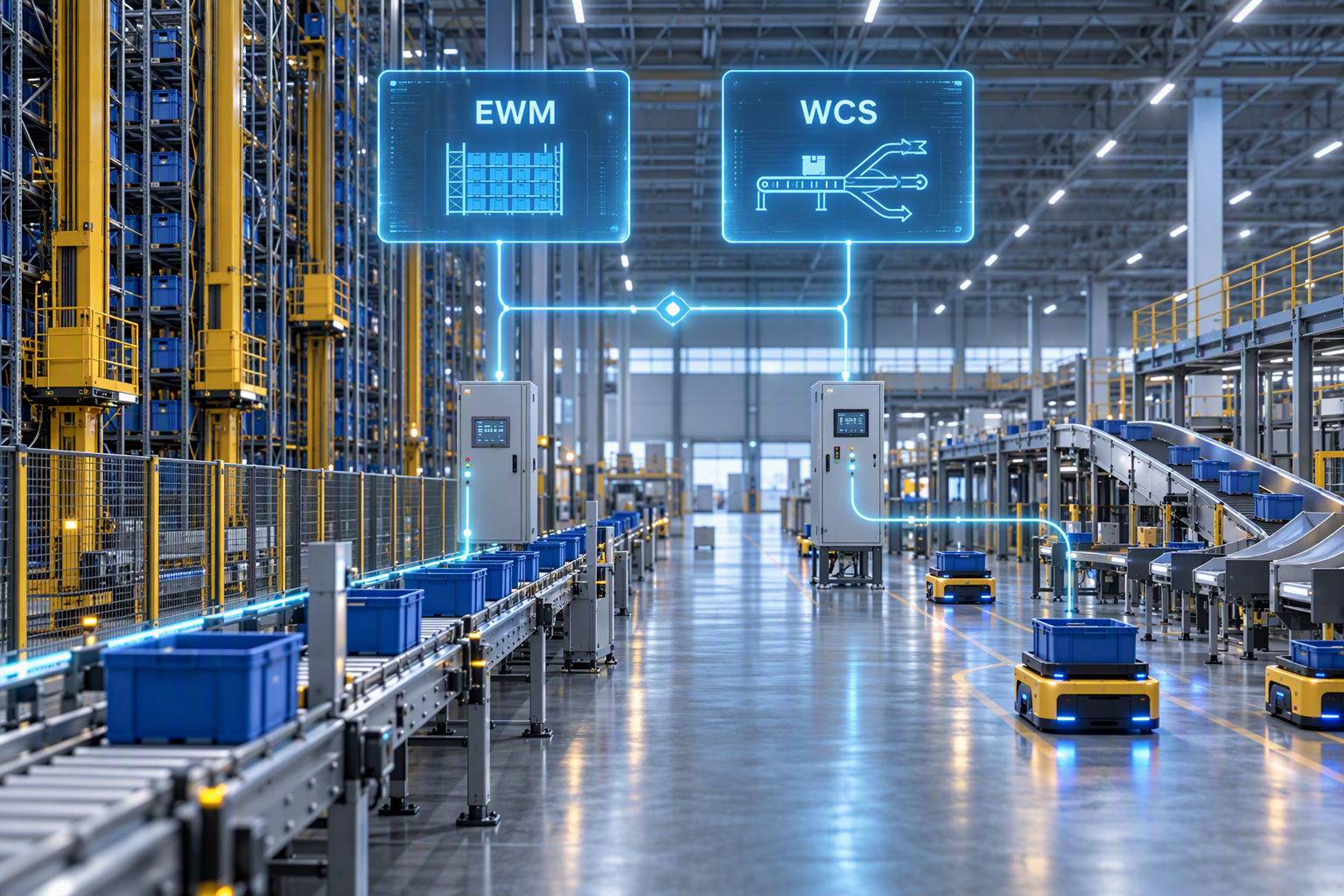
Integration architecture is another important consideration. Especially in larger automation projects, companies often need to decide whether direct integration is sufficient or whether additional integration layers are required.
For more information, see our article:
“Middleware or Direct SAP EWM Integration for Pick-by-Light?”
Production Supply Requires Different Considerations
In production environments, requirements differ significantly from those of traditional distribution warehouses. Real-time material supply, Kanban processes, and short response times can all influence the choice of picking technology.
Practical examples can be found in our related article:
The Use Case Matters More Than the Technology
Pick-by-Light and Pick-by-Voice are among the most established picking technologies in SAP EWM environments. Both can reduce errors, accelerate processes, and improve productivity.
The optimal choice, however, depends less on the technology itself and more on the requirements of the warehouse operation. Travel distances, pick density, SKU structure, and workforce organization often have a greater impact than the hardware being used.
Organizations should therefore begin with a structured assessment of processes and warehouse structures before selecting a technology. This makes it possible to determine whether Pick-by-Light, Pick-by-Voice, or a combination of multiple technologies is the most suitable solution.
If you are planning the introduction or optimization of Pick-by-Light in SAP EWM, visit our SAP EWM Pick-by-Light solution page for additional information on use cases, integration architectures, and implementation services.
Frequently Asked Questions About Pick-by-Light and Pick-by-Voice
Would you like to learn more about Pick-by-Light and Pick-by-Voice? Below you will find answers to the most frequently asked questions regarding use cases, benefits, and key decision criteria.
No. Both technologies have different strengths and are suitable for different operational environments.
Particularly in environments with high pick density, short travel distances, and repetitive picking activities.
Especially in large warehouse areas with longer travel distances and hands-free operational requirements.
Yes. Many companies deploy different picking technologies across different warehouse zones.
Yes. Modern SAP EWM environments can also support technologies such as Pick-by-Vision, Pick-by-Motion, robotics, and other picking solutions.