When implementing or further developing SAP Extended Warehouse Management, the question of the appropriate system architecture arises early on.
Embedded SAP EWM and decentralized SAP EWM are based on the same functional foundation but differ significantly in terms of system integration, architectural setup, and operational and scalability capabilities.
This page provides a structured comparison of both approaches and supports the assessment of which architecture is suitable under specific organizational, logistical, and technical conditions.
SAP EWM is directly integrated into SAP S/4HANA. ERP and warehouse processes run within a single system and a shared database.
SAP EWM is operated as an independent system and connected to SAP ERP or SAP S/4HANA via standardized interfaces. ERP and warehouse management are technically decoupled but remain process-integrated.
Embedded SAP EWM is characterized by a lean system architecture. SAP EWM is directly integrated into SAP S/4HANA, the number of involved systems is low, and the overall landscape remains straightforward. This architecture reduces technical dependencies and simplifies overall operations.
Decentralized SAP EWM is based on a clearly separated system architecture. ERP and warehouse management run as independent systems. This decoupling enables targeted development, maintenance, and scaling of individual components and offers structural advantages, particularly in complex logistics environments.
In an embedded scenario, process integration takes place within a single system. Warehouse and ERP processes access a shared data basis directly, information is available in real time, and synchronization efforts are minimized.
In a decentralized scenario, processes are integrated via defined interfaces. This requires a clean integration architecture and consistent interface design but provides greater flexibility in process design, decoupling, and further development.
Embedded SAP EWM is powerful and stable for many warehouse environments. However, in scenarios with increasing throughput requirements, high parallelism, or highly automated warehouse processes, the shared system usage may reach technical or organizational limits.
Decentralized SAP EWM enables targeted scaling of warehouse management independently from ERP. This architecture is particularly suitable for high-performance logistics centers, automated intralogistics environments, as well as 24/7 operations or highly fluctuating workload profiles.
In an embedded setup, maintenance windows, release changes, or system interventions directly affect both ERP and warehouse operations. Operations, upgrades, and lifecycle management must be closely coordinated.
In a decentralized setup, operations, maintenance, and further development of the warehouse management system can be organized independently of ERP cycles. This increases flexibility, especially in environments with high requirements for availability and operational stability.
Embedded SAP EWM typically involves lower initial and operating costs, as fewer systems need to be deployed, integrated, and monitored. The lower architectural complexity has a positive impact on implementation, operations, and maintenance.
Decentralized SAP EWM involves higher implementation and operating effort. However, it offers advantages in scalability, stability, and long-term future viability – particularly in complex or rapidly growing logistics environments.
Embedded and decentralized SAP EWM follow different architectural approaches. Which variant is suitable depends on logistical requirements, the existing system landscape, and long-term strategic objectives. A structured assessment helps identify the appropriate architecture early on.
Embedded SAP EWM is often chosen when a manageable system landscape is desired and warehouse and ERP processes are tightly integrated.
This architecture is particularly suitable for warehouses with medium complexity, where stability, transparency, and lean operations are key priorities.
Decentralized SAP EWM is typically used in scenarios with high throughput requirements, extensive automation, or site-specific characteristics that require independent warehouse management.
The technical decoupling enables targeted scaling and greater flexibility in operations.
In many cases, the appropriate architecture results not from a single requirement but from the interaction of system landscape, operating model, and future development.
A sound evaluation therefore considers both embedded and decentralized SAP EWM in the overall context of the SAP logistics architecture.
The decision between embedded and decentralized SAP EWM is closely linked to:
Considering individual aspects in isolation often leads to suboptimal results. A robust architecture decision therefore evaluates both options within the overall context of the SAP logistics architecture.
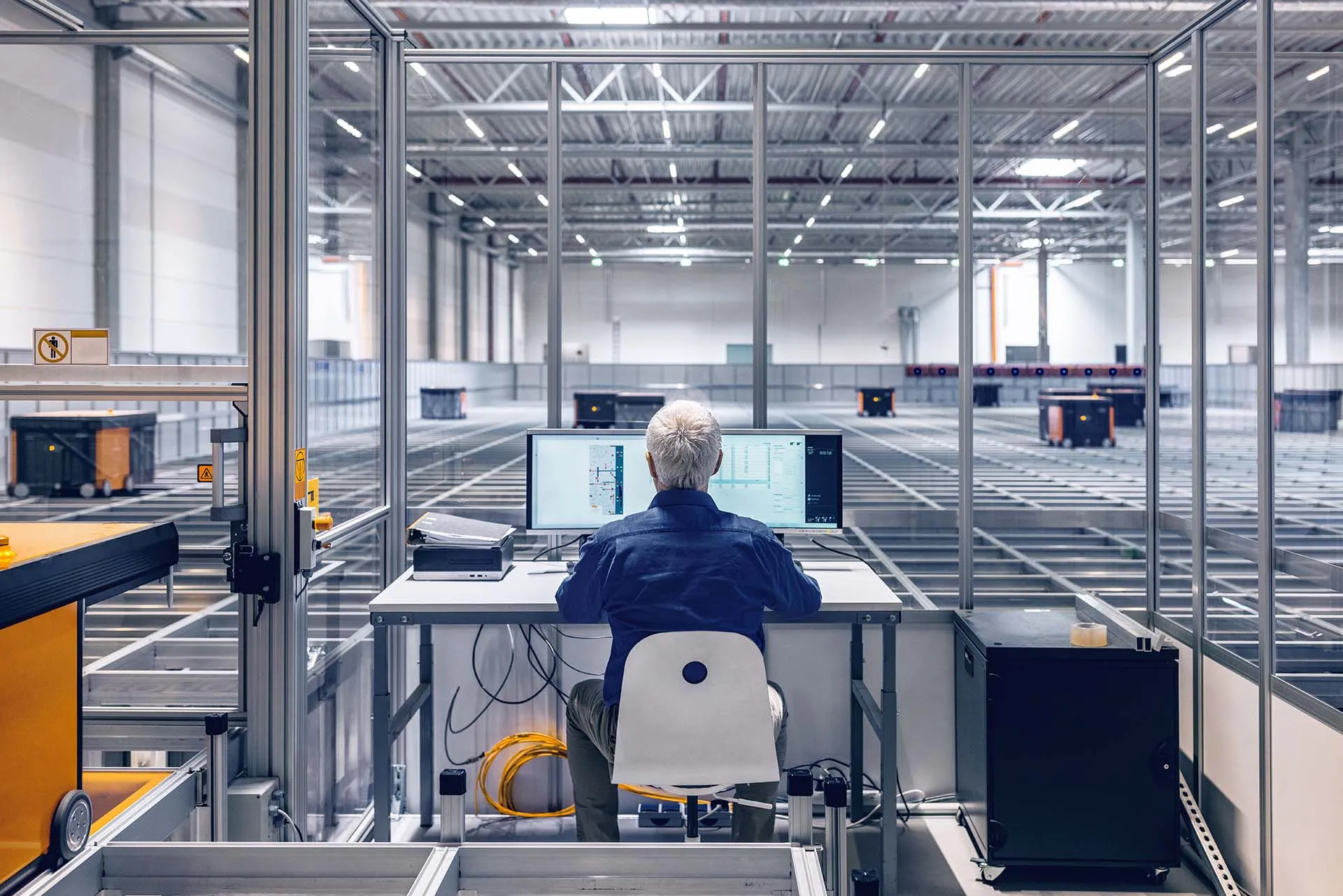
Selecting the appropriate SAP EWM architecture is a strategic decision with long-term impact on operations, costs, and logistics performance
As part of a professional exchange, a structured initial assessment can be conducted, for example with regard to architecture models, integration effort, and scalability requirements.
Have questions about selecting the right SAP Extended Warehouse Management architecture? This FAQ section summarizes key questions that regularly arise when deciding between embedded and decentralized SAP EWM.
Embedded SAP EWM is a very suitable solution for many mid-sized companies. However, the right choice depends on warehouse complexity, level of automation, and long-term requirements.
Not necessarily. The decentralized architecture offers advantages in very high-load or complex scenarios but is not required per se.
In principle, yes. However, this should be considered early in the architecture design, as it involves significant effort.
Yes. Especially SAP S/4HANA Cloud, Public Edition imposes functional and architectural constraints that must be considered.
Embedded SAP EWM Basic is included in many S/4HANA licenses, while Advanced functionality and decentralized deployments require additional licensing. Licensing aspects should therefore be part of the architecture decision.
In an embedded scenario, maintenance windows impact ERP and warehouse operations simultaneously. In a decentralized setup, warehouse operations can be organized independently of ERP.
Discover the latest analyses, articles, and perspectives on SAP, supply chain, and business transformation. Practical knowledge – directly from our consultants for your business.